
Modern Indian Home Design: What’s Hot in 2026 (Design Secrets)
Something interesting is happening with Indian home design right now. We’re stepping away from those strict design rules that used to dictate exactly how spaces should look. Instead, we’re focusing on something far more important creating homes that actually make you feel good when you walk through the door. I’ve been watching this shift happen, and it’s really about crafting spaces that connect with the people who live there.
Here’s what’s changed: sustainability isn’t some fancy add-on anymore. It’s become the starting point for smart design choices. This whole mindset shift kicked off during the pandemic when so many of us found ourselves growing herbs on windowsills and learning to appreciate what nature brings to our daily lives. Natural materials are everywhere now in Indian homes, and there’s a good reason they bring that sense of calm and real texture that our spaces were missing.
You’ll also notice how walls are coming down. Open floor plans are becoming the norm, creating flow between rooms that used to feel completely separate. And because space is precious in most Indian homes, we’re getting creative with furniture that does double duty beds that fold away, sofas that turn into guest beds, tables that expand when friends come over.
What I want to share with you are the real changes shaping how we design Indian homes today. These aren’t just pretty trends that’ll be gone next year. They’re practical insights that can help you create a space that feels both current and truly yours.
Rich Colors and Warm Neutrals
Remember those cool grays and stark whites that seemed to be everywhere in Indian homes? They’re taking a back seat now. What’s happening instead is much more exciting we’re bringing back colors that actually make us feel something when we walk into a room. Rich, bold hues are pairing up with warm, earthy neutrals to create spaces that feel both expressive and comforting.
Why bold colors work in modern Indian homes
Bold colors are back, but they’re smarter this time around. Take Cardinal Red, for instance. This isn’t the harsh red that might have felt overwhelming before. It’s got these beautiful velvety undertones that add warmth and luxury without shouting for attention. When you pair it with gold accents or deep grays, it creates this elegant confidence that works perfectly in Indian homes.
Deep blues like indigo, midnight blue, and teal have become go-to choices for accent walls. They instantly add depth and make your statement pieces whether it’s artwork or that beautiful textured wall really pop.
Burgundy and those deeper reds are showing up again, especially in dining rooms and home offices. These colors create intimacy and warmth in ways that neutral walls simply can’t match. They don’t just sit there quietly they bring energy and personality to spaces that might otherwise feel a bit lifeless.
Finding the right balance with earthy tones
The trick to using bold colors successfully? Balance them with earthy tones that feel grounded and timeless. Terra that beautiful earthy terracotta that reminds you of baked clay and desert landscapes has become the perfect partner for more intense colors.
What’s really working well right now is mixing warm neutrals with earthy browns. Think soft beige and almond paired with cocoa, walnut, or clay brown. These combinations feel welcoming without overwhelming your senses. They’re particularly great in living rooms and bedrooms where you want that sense of comfort.
Cool grays? They’ve had their moment. What people are choosing instead are warm neutrals like sand cream, light mocha, and almond white. These colors make rooms feel cozy and sophisticated at the same time. They play beautifully with wooden furniture and traditional Indian elements too.
Color combinations that actually work
Here are the palettes that are defining modern Indian interiors right now:
- Rich jewel tones with neutrals: Cardinal red, emerald, or midnight blue with cream and gold accents—perfect for living rooms and dining areas
- Earthy clay tones with warm whites: Terracotta, burnt orange, and rust balanced with soft beige for that heritage-meets-contemporary feel
- Nature-inspired greens: Sage, olive, and moss green with light woods and natural textures for a calming effect
What we’re seeing is muted intensity colors with real depth and character, but softened just enough to live with comfortably. Dusty blues instead of bright ones, soft clay tones rather than bold reds, warm grays or greige replacing stark whites.
If you’re nervous about jumping into bolder colors, start small. Try one accent wall maybe behind your TV, sofa, or headboard. When you’re working with terracotta or deeper tones, go for matte or limewash finishes instead of glossy paint. They handle light more naturally and feel less intense.
Here’s something important about lighting: it completely changes how colors look. Warm LED lighting makes oranges and olives look rich and inviting, while white lighting can make them seem harsh. This matters especially in Indian homes where natural light changes so dramatically throughout the day.
These color choices reflect something deeper than just following trends. They’re about creating spaces that support your emotional well-being while celebrating Indian design traditions. The best part? These thoughtful combinations grow with you they adapt to changing décor, seasons, and lifestyles without needing a complete repaint.
Sustainable and Natural Materials
Sustainable materials aren’t just a nice-to-have anymore they’re becoming the foundation of smart home design. What started as a small movement has grown into something much bigger. Homeowners are realizing that choosing eco-friendly options isn’t about making sacrifices; it’s about creating healthier, more beautiful spaces for their families.
Why natural materials make your home feel better
There’s something special about bringing nature indoors, and it goes way beyond just adding a few potted plants. The pandemic taught us how important our home environment really is. Suddenly, we all became more aware of air quality, natural light, and how different materials actually make us feel.
Natural materials work because they connect us to something real. When you run your hand across a bamboo surface or walk barefoot on natural stone, your body responds differently than it does to synthetic alternatives. These materials provide subtle cues that help you feel more grounded and calm in your own space.
Think about flooring that mimics pebbles or surfaces that remind you of river stones. These aren’t just pretty they create sensory experiences that change how you experience your home every single day.
Smart material choices that actually work
Here are the sustainable options that are making the biggest difference in Indian homes:
FSC-certified wood gets sourced from forests that are managed responsibly. This means the trees are harvested without destroying ecosystems, and local communities benefit from the process. The Indian wood market is growing fast from USD 1 billion in 2024 to an expected USD 1.47 billion by 2029. That growth means more options and better prices for homeowners.
Bamboo has been used in Indian construction for centuries, especially in the Northeast. It’s incredibly strong for its weight and grows back quickly after harvesting. You’ll see it now in modern furniture, flooring, and decorative pieces. Plus, it naturally resists pests, which saves you money on treatments.
Natural clay and terracotta bring those earthy tones that work so well in Indian homes. These materials actually help keep spaces cooler, which is perfect for our climate. They show up now as tiles, flooring, and beautiful accessories that add character to any room.
Making choices that matter
What’s changed recently is how much information we have about our material choices. You can now find out exactly how much environmental impact different options have, from production to disposal. This transparency helps you make decisions that align with your values.
Working with local craftspeople has become popular again, and for good reason. When you source materials locally, you’re supporting traditional skills while reducing transportation emissions. Local artisans often know techniques that have been refined over generations knowledge that brings authentic character to modern homes.
The real shift is that people want their design choices to support their health and well-being. It’s not just about energy savings or being environmentally responsible. It’s about creating a home environment that actually makes you feel better every day you live in it.
When you choose sustainable materials thoughtfully, you’re not just decorating a space. You’re creating an environment that supports your family’s health while honoring traditional craftsmanship and protecting resources for future generations.
Curves, Arches, and Organic Forms
Those sharp, straight lines that used to define every piece of furniture in Indian homes? They’re softening up, and for good reason. Curved forms are back, bringing both beauty and some surprisingly practical benefits to modern spaces.
The return of 70s-inspired shapes
This isn’t just another fleeting design moment. The 70s revival has settled in for the long haul in Indian interiors. What started as nostalgia for bold colors and geometric patterns has evolved into something more meaningful spaces that actually feel good to live in.
Here’s the difference: those old 70s pieces were often more about making a statement than being comfortable. The curved furniture showing up in homes today? It’s built for real life. You can actually sink into these sofas after a long day, gather around these rounded tables for family meals, and sleep comfortably on beds with arched headboards.
These organic shapes work beautifully with the rich, warm colors that are trending right now. A curved sofa in cardinal red or a round dining table in natural wood creates visual interest without overwhelming a space. The softness balances out all that bold color we talked about earlier.
Furniture and decor with soft edges
Curved furniture is having a major moment. You’ll see:
- Sofas with rounded arms that invite you to curl up
- Coffee tables with no sharp corners to bump into
- Dining sets that encourage conversation
- Headboards with gentle arches
- Lounge chairs that feel like sculptural art
What I love about these pieces is how well they work with different styles. Whether your home leans contemporary, Scandinavian, or even minimalist, curved furniture fits right in. And if you live in one of those compact urban apartments where every inch counts, rounded edges are your friend—no more awkward navigation around sharp corners.
Kitchens benefit too. A curved island softens what’s usually a very angular room while still providing all the function you need. Curved walls guide you naturally through a space, creating flow that makes rooms feel more inviting.
Acoustic and spatial benefits of curved design
Beyond looking good, curves actually change how your space works. There’s real psychology here our brains respond to curved shapes differently than sharp angles. Curves feel calming, like the organic forms we find in nature.
The spatial benefits are immediate. Soft edges help smaller homes feel more open and flowing. Larger rooms get natural focal points that guide movement without creating barriers.
Sound behaves differently around curves too. Sharp corners bounce noise around harshly, which can make spaces feel tense. Curved surfaces help sound move more naturally through a room. This matters especially in open-plan Indian homes where controlling noise can be challenging.
Given how much time we’re spending at home these days, comfort has become non-negotiable. Round, curved forms create that sense of safety and calm that straight lines just can’t match. It’s furniture that actually helps you relax.
Layering, Texture, and Mixed Materials
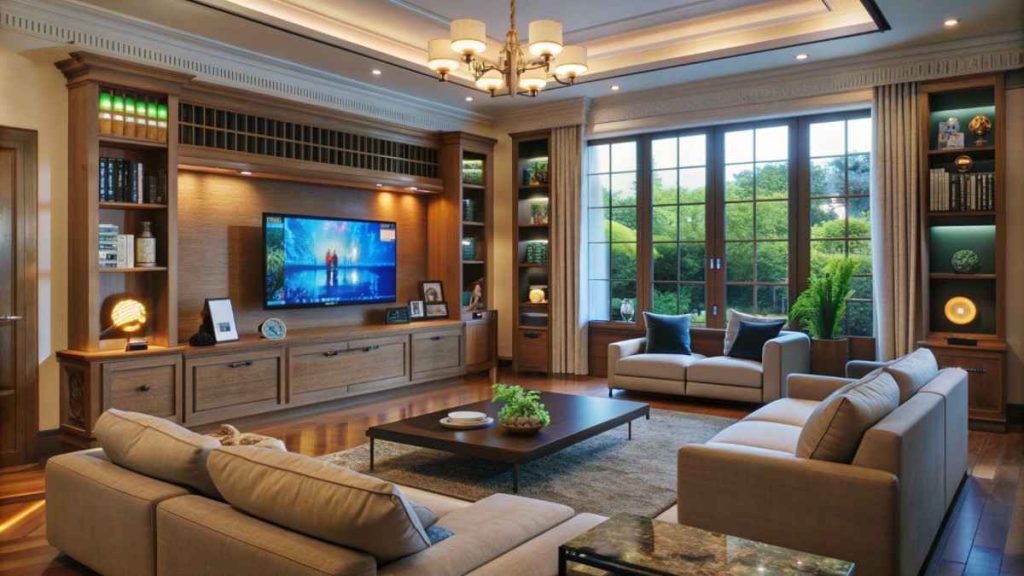
Here’s something you might not expect: texture is quietly becoming the star of Indian homes right now. When you layer different textures thoughtfully, you’re not just decorating you’re creating spaces that invite people to actually touch and experience them, not just look at them.
How to layer textures for depth
Think of texture layering like building a good meal. You start with your base walls, floors, and big furniture pieces then add layers that play off each other. The magic happens when you pair opposites: smooth marble counters with rough wooden cabinets, or a glossy coffee table next to a matte wool rug. The trick is finding that sweet spot where everything feels intentional, not like you just threw different materials together and hoped for the best.
Combining stone, velvet, and metal
What I love about Indian interiors right now is how fearlessly we’re mixing materials that used to never share the same room. Picture this: natural stone that feels solid and grounding, velvet that begs you to sink into it, and just a touch of metal that catches the light. When you put these together, something interesting happens each material actually looks better because of what’s next to it. A soft velvet sofa against an exposed brick wall? That contrast makes both elements more beautiful.
Using rugs, lighting, and wall art for dimension
Textiles are climbing the walls these days, and I’m here for it. Instead of the usual framed prints, people are hanging woven pieces and tapestries that actually help with room acoustics too. Your lighting fixtures don’t just illuminate anymore they’re sculptures that define the whole mood of a space. And rugs? They’re doing the heavy lifting of marking out different areas in those open-plan homes we talked about earlier, adding comfort while they’re at it.
Minimal maximalism: the new Indian contemporary interior design
There’s this approach that’s really taking hold call it “thoughtful abundance.” It’s about having beautiful things around you, but only the ones that actually mean something. Each piece earns its spot because it connects with you, not because it fills space. We’re celebrating the incredible colors and crafts that make Indian design special those deep rani pinks, warm ochres, rich indigos while still leaving room to breathe. As Diana Vreeland once said, “pink is the navy blue of India,” and she was talking about that particular rani pink that sits so beautifully next to sindoor red and saffron.
Smart and Multi-Functional Spaces
Space is at a premium in most Indian homes today, which means every square foot needs to work harder. The good news? Furniture designers and tech companies have figured out some pretty clever solutions to help you make the most of what you’ve got.
Foldable furniture and hidden storage
Think of your furniture as having a day job and a night job. Murphy beds are perfect examples—during the day, your living room stays open for the family to gather, but when guests stay over, you pull the bed down from the wall. Your sofa stays put underneath, so you’re not constantly rearranging furniture.
Dining tables that expand and contract solve another common problem. When it’s just your family eating dinner, keep it small. Weekend dinner party? Pull it out to seat eight. Storage beds work similarly—they look like regular beds but lift up to reveal space for bedding, clothes, or seasonal items underneath. No need for a separate wardrobe taking up floor space.
Room dividers and convertible layouts
The beauty of convertible furniture lies in how it adapts to your daily rhythm. That sofa in your living room becomes a bed when your cousin visits from out of town. Your slim console table by the entrance? It extends into a full dining table when you need it. These pieces understand that Indian homes serve multiple purposes throughout the day.
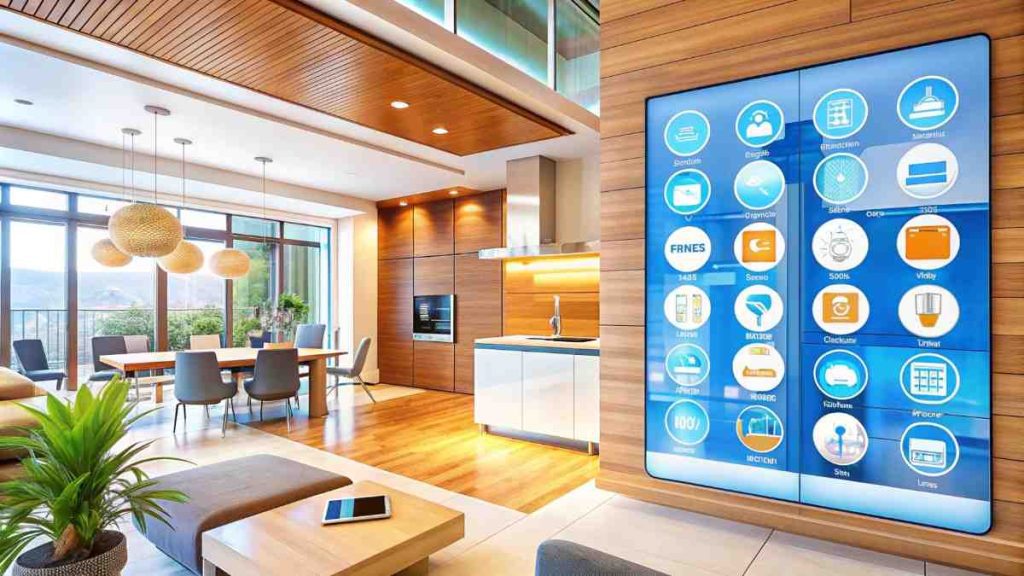
Smart lighting and voice-controlled appliances
Smart home technology isn’t just for tech enthusiasts anymore. About 92% of people find voice controls actually make life easier once they try them. Most homes start with smart TVs and speakers—73% and 45% respectively.
Picture this: you’re cooking dinner with messy hands and need to dim the lights. Instead of wiping your hands and walking to the switch, you just say “dim the lights”. Same when you want to turn off the AC from bed. These small conveniences add up to make daily life flow more smoothly.
Designing for smaller Indian homes
Every bit of space counts in compact homes. Wall-mounted tables fold down when you need a workspace and disappear when you don’t. The key is choosing pieces that move, fold, expand, or do double duty without being complicated to use.
Even that awkward space under your staircase can become useful storage for shoes, sports equipment, or household supplies. The goal isn’t to cram more stuff in—it’s to make your existing space work better for how you actually live.
Conclusion
What we’re seeing with Indian home design right now isn’t just about following the latest trends. It’s about creating spaces that actually work for how we live today.
The colors we’re choosing now—those rich reds, deep blues, and warm terracottas—they’re bringing back the emotional connection we’d lost with our spaces. When you walk into a room painted in cardinal red or soft clay tones, you feel something. That’s what good design does.
The shift toward sustainable materials like bamboo, FSC-certified wood, and natural clay isn’t just good for the planet. These materials bring authenticity and texture that makes your home feel real, lived-in, connected to something bigger than just four walls.
Those curved sofas and organic shapes we talked about? They’re not just prettier to look at. They actually make your home feel more comfortable and flow better, especially when you’re working with limited space. And the way they soften sound in open-plan homes makes daily life more pleasant.
Smart furniture that folds, expands, and multitasks isn’t about showing off technology. It’s about making your home work harder so you don’t have to. When your dining table can shrink down for daily use but expand for family gatherings, or your bed folds away to give you more living space, that’s practical magic.
Here’s what I want you to take away from all this: the best homes in 2026 aren’t following every trend blindly. They’re picking and choosing what actually makes sense for the people living there. Your space should tell your story, not copy someone else’s.
Start with what feels right to you. Maybe it’s one accent wall in a color that makes you smile, or a single piece of curved furniture that changes how a room flows. Small changes often make the biggest difference in how a space feels.
Remember, good design isn’t about impressing visitors. It’s about creating a home that supports and inspires you every single day.
FAQs
Q1. What are the trending colors for modern Indian homes in 2026?
Rich colors like cardinal red, deep blues, and burgundy are popular, balanced with warm neutrals such as terra, sand cream, and light mocha. These combinations create depth and character while maintaining a welcoming atmosphere.
Q2. How is sustainability incorporated into contemporary Indian interior design?
Sustainability is now a fundamental aspect of design, with materials like FSC-certified wood, bamboo, and natural clay being widely used. Biophilic design elements and locally sourced materials are also key in creating eco-conscious interiors.
Q3. Why are curved and organic forms making a comeback in Indian home design?
Curved furniture and organic shapes offer both esthetic appeal and practical benefits. They create a sense of flow, improve acoustics, and provide a calming effect, making them particularly suitable for smaller Indian homes.
Q4. What are some smart space-saving solutions for modern Indian apartments?
Foldable furniture, hidden storage, and convertible layouts are popular. Examples include Murphy beds, extendable dining tables, and wall-mounted foldable desks. These solutions help maximize space in compact urban homes.
Q5. How can textures be effectively layered in contemporary Indian interiors?
Start with a solid foundation of walls, flooring, and large furniture pieces. Then, gradually introduce contrasting elements like rough against smooth or matte against glossy. Combine materials such as stone, velvet, and metal to create visual interest and depth.