
Expert Guide to Spotting Natural vs Synthetic Stones
Gemstone identification matters more than most people realize, especially when you have very fine clarity as your first clue that you’re dealing with a synthetic stone. Few natural gems are clean to 10X magnification. Natural gemstones form deep within the Earth over millions of years through geological processes. Synthetic gemstones are produced in laboratory environments using machines that mimic these natural conditions[-4]. You might be exploring a brown gemstone identification case, consulting a raw gemstone identification chart, or reviewing a professional gemstone identification report. Understanding the differences becomes critical in all these scenarios. This gemstone identification guide walks you through visual inspection methods and professional testing techniques like hardness evaluation on the Mohs scale. You’ll also find practical tips for verifying authenticity before making your purchase.
Understanding Natural vs Synthetic Gemstones
What are natural gemstones
Natural gemstones form through geological processes deep within the Earth’s crust without human intervention. Heat, pressure, and chemical reactions work over millions of years to create these minerals. Mining operations then extract them. Each natural stone carries unique characteristics that random forces of nature shaped during formation.
These gemstones fall into two categories: inorganic minerals like ruby, sapphire, emerald, and diamond, and organic materials such as pearl and amber. The imperfections you see in natural stones are known as inclusions. They reveal the stone’s formation history. To name just one example, natural emeralds often feature ‘jardin’ or garden-like inclusions that are a hallmark of their natural origin. These unique characteristics add to their rarity and emotional appeal.
What are synthetic gemstones
Synthetic gemstones are created in controlled laboratory environments. Advanced technological processes replicate natural formation conditions. Auguste Verneuil synthesized the first gemstone, ruby, with his flame-fusion process in 1902. The market has had these lab-created stones available since the early 1900s.
These stones share the same chemical composition, crystal structure, and physical properties with their natural counterparts. A synthetic emerald is a real emerald, chemically speaking. The difference lies solely in origin. You’ll encounter various terms in the marketplace: ‘lab-grown,’ ‘lab-created,’ ‘man-made,’ or ‘created gemstones.’ Sellers rarely use ‘synthetic’ due to its connotation of being fake, though gemologically these stones are both real and not natural.
The creation timeline is very different. Lab-grown gemstones form within weeks to months. Natural formation requires millions of years. Manufacturing processes include flame-fusion, flux growth, and hydrothermal growth. Some are expensive and others budget-friendly.
Key differences between natural and synthetic stones
Beyond origin, several factors separate these stone types. Natural gemstones cost by a lot more. Lab-grown versions are priced 20-40% less than comparable natural stones. This price gap stems from production efficiency versus costly mining operations.
Appearance provides another difference. Lab-created gemstones often exhibit fewer inclusions and more consistent color due to controlled conditions. Sometimes they appear too perfect. Natural stones contain imperfections that gemstone identification experts recognize as authenticity markers.
Value retention is different by a lot. Natural diamonds retain approximately 50% of their original value when resold. Lab-created diamonds fetch essentially no resale value. Environmental considerations also play a role. Synthetic production avoids mining-related habitat destruction and water contamination. Distinguishing between synthetic and natural stones proves very difficult without gemological testing. Professional gemstone identification reports are necessary to verify.
Visual Inspection Methods for Gemstone Identification
Exploring inclusions and imperfections
Gemologist Edward J. Gübelin proved that inclusions could identify gemstones back in the 1940s. These microscopic features function as a stone’s diary and reveal formation conditions and authenticity. Natural gemstones contain crystalline inclusions (trapped minerals), liquid inclusions (ancient fluids preserved in bubbles), gas inclusions (carbon dioxide or methane pockets), healing fractures (feather-like sealed cracks), and fingerprint inclusions (spiral patterns from healed fractures).
Emeralds display ‘jardins’ or garden-like inclusions, while sapphires show silk-like rutile needles. These imperfections confirm natural origin. Synthetic stones reveal different characteristics, though. Flame-fusion synthetics capture gas bubbles because they grow at ambient pressure, unlike natural magmatic gems formed at high pressure. Flux-grown stones contain flux-filled fingerprints with higher relief and translucent to opaque appearance. You can distinguish them from natural fluid-filled fingerprints.
Analyzing color patterns and consistency
Color distribution separates natural from lab-created stones. Natural sapphires display angular color zoning that follows internal crystal structure. Synthetic versions show curved color bands or uniform coloring. This happens because natural formation involves random geological forces and creates uneven trace element distribution.
Lab conditions enable strict control and produce richer colors with exceptional clarity. Stones that appear too perfect often indicate synthetic origin. Professional gemologists examine hue, tone, and saturation under various lighting conditions to detect these differences.
Checking clarity under magnification
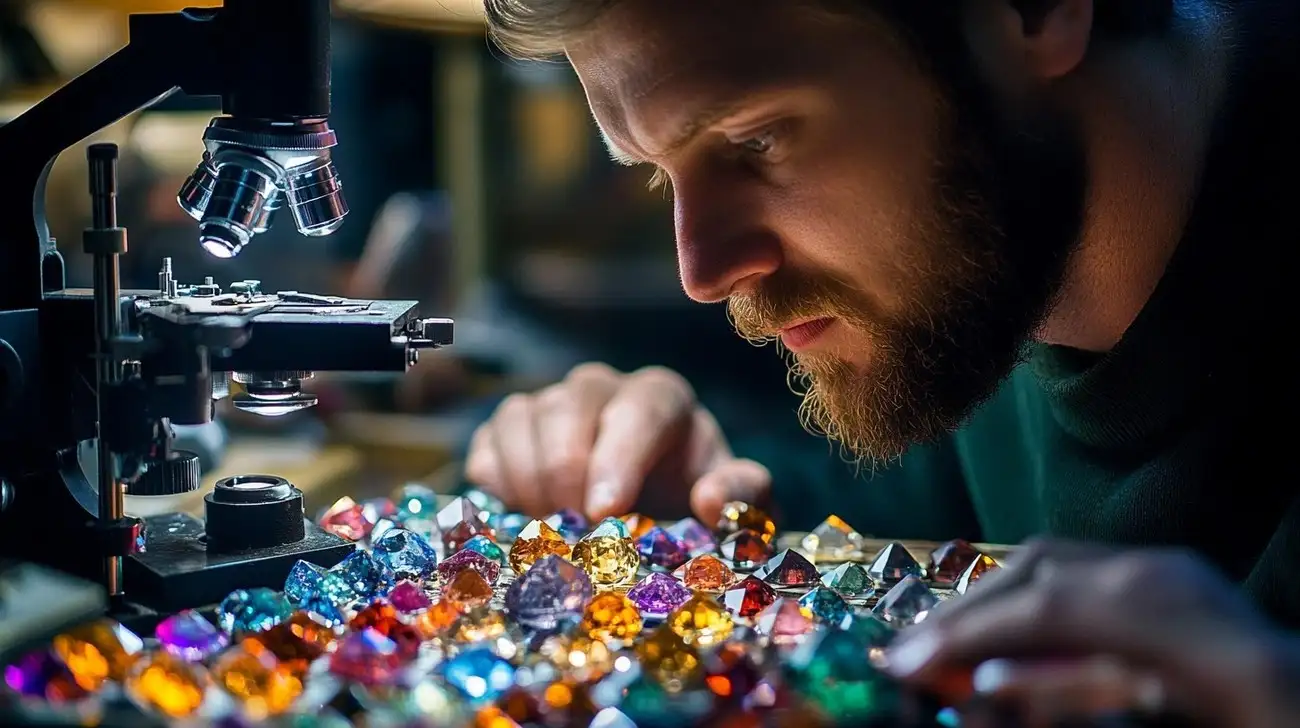
A standard 10x jeweler’s loupe provides entry-level inspection capability. Professional gemological microscopes offer 40-90x magnification with specialized lighting options. Darkfield illumination makes inclusions stand out against dark backgrounds. Diffused lighting reveals color zoning, reflected light shows surface features, and fiber-optic lighting adjusts to any angle.
Surface bubbles flag synthetic origin right away, while natural etch marks authenticate stones. You’ll spot curved striae in flame-fusion synthetics and chevron graining in hydrothermal emeralds under proper magnification.
Observing growth patterns and lines
Natural gemstones exhibit irregular, angular growth lines that reflect slow crystal development. Synthetic stones display straight, repeated lines or curved striae absent in natural formation. Flame-fusion sapphires show curved color banding and Plato lines visible in cross-polarized light. Hydrothermal gems contain chevron graining and nailhead spicules not found in nature.
Professional Testing Techniques
Refractive index testing
The refractive index (RI) provides the single most important piece of information to identify gemstones. A refractometer measures how light bends as it passes through the gem and reveals RI values measurable to three decimal points. This instrument also determines birefringence and optic sign. Diamond registers 2.417-2.419, while emerald ranges from 1.565-1.602. Doubly refractive stones display two shadow edges at the time you view them through the refractometer eyepiece.
Spectroscopy analysis
Spectroscopes break light into spectral components and reveal absorption lines unique to each gemstone. Two instrument types exist: diffraction grating and prism. Both work well. UV-Vis-NIR, FTIR, and Raman spectroscopy serve as common methods. These techniques identify mineral species and detect treatments like polymer impregnation.
UV fluorescence examination
Ultraviolet testing uses longwave (315-400 nm) and shortwave (200-280 nm) light. Many heat-treated rubies and sapphires display chalky shortwave fluorescence. You will never find this in untreated stones. Shortwave light can damage your eyes and requires protective glasses. This test detects treatment at concentrations as low as 0.01 parts-per-million.
Hardness testing on Mohs scale
The Mohs scale ranks gemstones from 1 (talc) to 10, with diamond scoring 10. All but one of these diamonds reach this hardness level: natural and lab-grown. Friedrich Mohs introduced this scale in 1822. Never test finished gems because hardness points leave permanent scratches.
Understanding gemstone identification reports
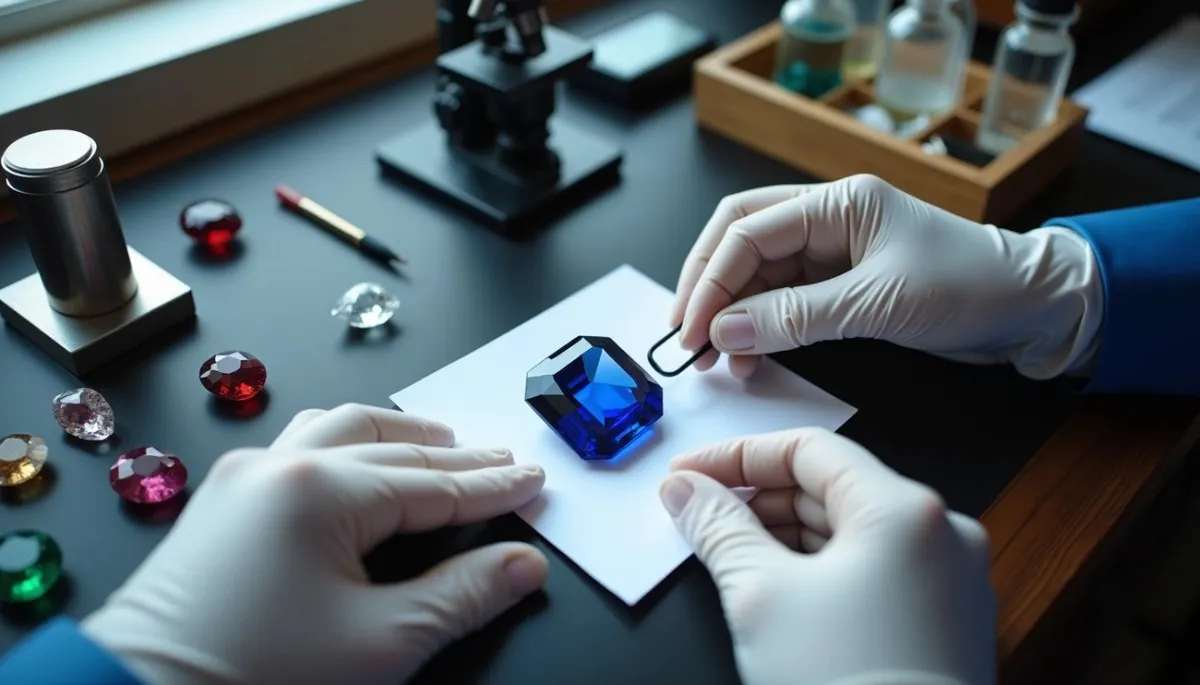
Professional labs like GIA, IGI, and Gubelin issue gemstone identification reports. These reports detail species, variety, measurements, color, and treatments. They screen materials using state-of-the-art technologies that determine natural, laboratory-grown, or simulant origin. Graduate gemologists assess characteristics according to strict international systems.
Practical Tips for Buyers
Requesting proper certification and documentation
Ask to get gemstone identification reports from recognized laboratories before you finalize any purchase. GIA, IGI, AGS, and Gubelin issue certificates documenting species, measurements, weight, color, clarity, and treatments. Security features like holograms and watermarks are included in these reports to prevent forgery. You can verify certificates online through the lab’s database using the unique report number or scan QR codes printed on reports with your phone.
Certified gemstones sell for 20-30% more than uncertified stones. This premium buys you proof of authenticity and professional quality assessment. Never make purchases based on verbal communication from sellers alone.
Too-perfect gemstones and what they reveal
Synthetic stones exhibit fewer inclusions and suspiciously uniform color due to controlled lab conditions. Question its natural origin when a gem appears flawless under 10x magnification. Lab-created diamonds are almost flawless, while natural diamonds contain unique inclusions formed over millions of years.
Comparing market prices
Genuine gemstones command higher prices than synthetic versions, with lab-grown stones priced 20-40% less than comparable natural specimens. Deals appearing too good to be true warrant skepticism.
When to consult a professional gemologist
Look for jewelers with Graduate Gemologist (GG) credentials that indicate advanced gemological training. Gemologists verify authenticity through lab tests and grade quality. They determine whether stones are natural, synthetic, or treated.
Conclusion
Gemstone identification might seem complex at first, but you can separate natural from synthetic stones with the right knowledge. Visual inspection methods work well as a starting point. You can then verify your findings through professional testing and certification. Always request proper documentation from recognized laboratories when dealing with important purchases. Note that stones appearing too perfect often indicate synthetic origin, so consulting a certified gemologist remains your best investment for authentic gemstone verification and peace of mind.
FAQs
Q1. What is the main difference between natural and synthetic gemstones?
Natural gemstones form deep within the Earth over millions of years through geological processes involving heat, pressure, and chemical reactions. Synthetic gemstones are created in controlled laboratory environments using advanced technology that replicates natural formation conditions, typically within weeks to months. While they share identical chemical composition and physical properties, the key distinction lies in their origin and formation timeline.
Q2. How can I tell if a gemstone is too perfect to be natural?
Lab-created gemstones often exhibit fewer inclusions and more consistent color due to controlled production conditions, sometimes appearing suspiciously flawless. If a gem appears perfect under 10x magnification with no visible inclusions or imperfections, this could indicate synthetic origin. Natural gemstones typically contain unique inclusions and imperfections that formed during their millions of years of development, which gemologists recognize as authenticity markers.
Q3. Why do synthetic gemstones cost less than natural ones?
Lab-grown gemstones are typically priced 20-40% less than comparable natural stones because of production efficiency versus costly mining operations. The controlled laboratory environment allows for faster, more cost-effective production compared to the extensive mining, extraction, and processing required for natural gemstones. Additionally, natural gemstones retain significantly more resale value, with natural diamonds retaining approximately 50% of their original value while lab-created diamonds fetch essentially no resale value.
Q4. What should I look for in a gemstone certification report?
A professional gemstone identification report from recognized laboratories like GIA, IGI, AGS, or Gubelin should detail the species, variety, measurements, weight, color, clarity, and any treatments applied to the stone. These reports include security features like holograms and watermarks to prevent forgery, and you can verify them online through the lab’s database using the unique report number or by scanning QR codes printed on the reports.
Q5. When should I consult a professional gemologist?
You should consult a professional gemologist, particularly one with Graduate Gemologist (GG) credentials, when making significant gemstone purchases, when a deal appears too good to be true, or when you need verification of authenticity. Gemologists can verify authenticity through specialized lab tests, grade quality accurately, and determine whether stones are natural, synthetic, or treated, providing you with peace of mind and proper documentation for insurance purposes.