
How AI is Transforming Jewelry Design Courses
Picture this: you sit down to design a ring, and within five minutes, you have 16 different variations to choose from. That’s what AI tools can do for jewelry design students today. This speed completely changes how you’ll learn to create beautiful pieces.
Smart jewelry sales are climbing 16.9% each year, and by 2026, most designers will work with AI-supported workflows instead of just basic sketches. Whether you’re looking at jewelry design degree courses, CAD-focused programs, or shorter certification options, AI integration is reshaping what you’ll study.
This guide walks you through how AI is reshaping jewelry design education. You’ll discover the tools you’ll actually use in class, the skills you’ll build, and how to pick between part-time programs and online courses that prepare you for this tech-forward industry. Think of it as your roadmap to understanding where jewelry design education is headed and how you can get ready for it.
How Jewelry Design Education is Changing with AI
Traditional Teaching Methods vs AI-Enhanced Learning
Think about learning to design jewelry the old way. You’d spend hours sketching by hand, then weeks carving a single design concept in wax before anyone could see what it might actually look like. Students would carve physical prototypes that ate up both time and materials.
Now, CAD software with AI features has flipped this process. You can rotate your design on screen, peek inside it, and make tweaks before a single piece of metal gets touched. Your digital files talk directly to 3D printers that create wax or resin models, which then become the final metal pieces. You’re basically testing your ideas digitally first, which means fewer mistakes and less wasted material.
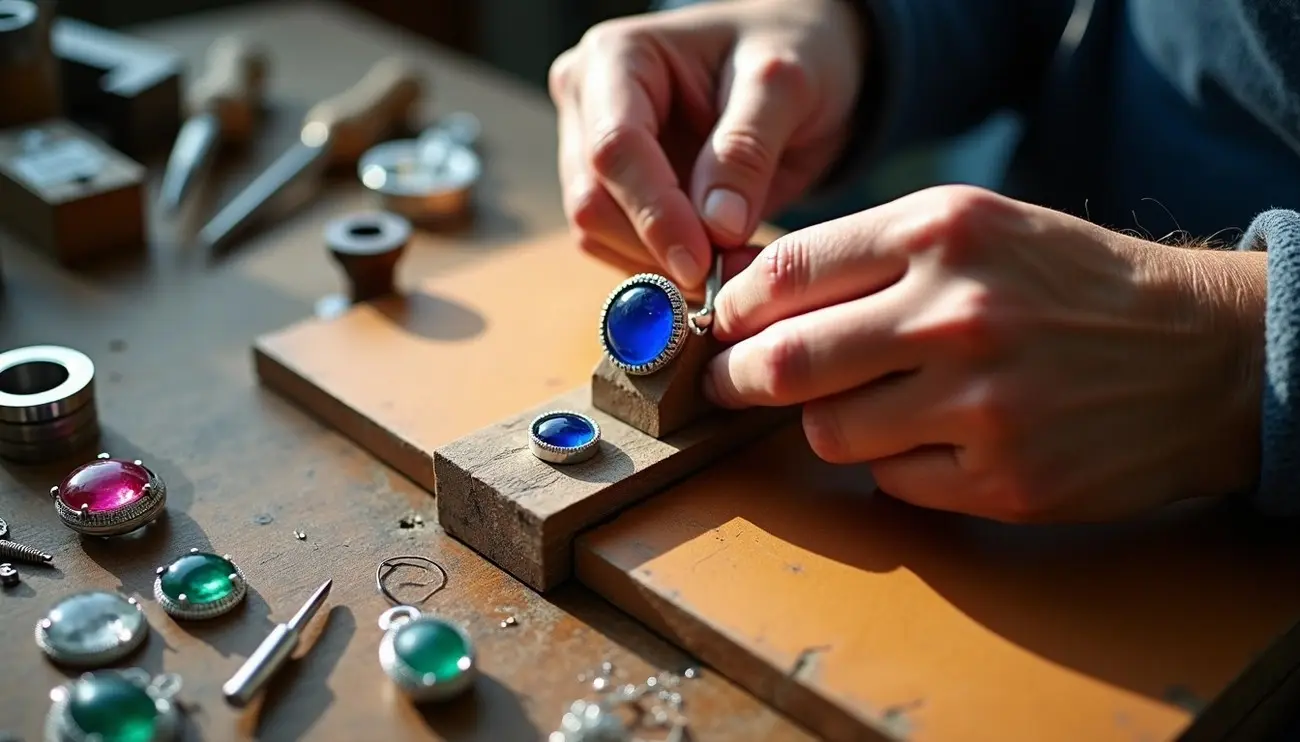
Here’s what hasn’t changed: you still need your creative eye and artistic instincts. AI doesn’t do the actual jewelry making – the casting, soldering, or stone setting. What it does handle is showing you what your piece will look like and helping you present designs to clients who want something special.
Why Schools Are Adding AI to Their Programs
Every respected jewelry design school will have AI-based tools in their curriculum by 2026. Students get better at creating precise 3D jewelry designs, spotting what’s trending in the market, placing gemstones with perfect proportions, and building portfolios that actually impress employers.
There’s a new skill you’ll need to master: prompt engineering. You’ll learn how to “talk” to AI tools so they understand your creative vision. This means getting comfortable with specific words, phrases, and concepts that help you get useful results quickly from different AI programs. Schools are working to make sure every student can access these tools, regardless of their tech background or connections.
The real win here? AI lets you customize designs for individual customers on a much larger scale, while also creating pieces that use materials more sustainably.
The Technology That’s Reshaping How You’ll Learn
Jewelry design CAD courses now teach AI-powered design software as a core requirement. You’ll get hands-on practice with the same cutting-edge tools that professional studios use to visualize, model, and perfect their creations. These programs give you real experience with industry-standard design tools, so you’re ready for jobs where speed matters but beautiful craftsmanship still comes first.
Essential AI Tools and Software in Course Curriculum
Your courses will include specific software platforms that handle different stages of the design process. These tools help you turn creative ideas into pieces that can actually be made.
AI Design Platforms for Concept Generation
Tashvi AI offers the only jewelry-specific platform with a real free tier, letting you design custom rings, necklaces, or earrings in 60 seconds. The guided design mode asks questions about stone type, setting style, metal, and occasion rather than forcing complex prompt writing. BLNG AI serves enterprise jewelry companies with design iteration, marketing content generation, and in-store customization features. You’ll master sketch-to-render workflows where hand-drawn concepts become photorealistic images, getting client approval before diving into detailed CAD modeling.
CAD Programs Integrated with AI Features
Autodesk Fusion brings CAD and CAM capabilities together in one cloud-based platform, using parametric modeling to refine every curve and setting with precision. 3ds Max creates photorealistic visualizations, showing exactly how light bounces off metals and gemstones. Jewelry CAD Dream gives you tools for ring sizing, milgrain, chain creation, and stone weight calculations, with easy STL file exports for 3D printing. These programs work alongside AI to create production-ready specifications.
Digital Prototyping and Virtual Try-On Technologies
3D printers like the MJP 300W Plus produce jewelry wax patterns at 45 mm/hr build speed with 30-50 µm layer thickness. KiXR’s virtual try-on technology creates anatomically accurate jewelry placement, converting SKUs into 3D using CAD files or photographs. Customers can see pieces in different settings – wedding, office, and party scenarios.
Customization Tools for Personalized Design
Professional designers create 10-20 variations quickly without writing complex prompts for each version. Jewelry-specific tools produce designs with manufacturing awareness, understanding which settings, proportions, and construction methods actually work.
Quality Control and Manufacturing AI Systems
Computer vision systems check products for surface flaws, misaligned gemstones, and symmetry issues at remarkable speed. Adding AI to quality control can improve defect detection rates by 30%.
Skills You’ll Build with AI-Focused Jewelry Design Courses
These AI-focused programs give you practical abilities that older jewelry design courses simply couldn’t teach. You’ll connect your creative ideas with the technical skills needed to bring them to life.
Creating Design Variations Quickly with AI
Generative AI creates 500+ design variations from a single brief, reducing concept-to-prototype from weeks to hours. You’ll explore thousands of variations in metal, stone settings, and motifs in seconds. This speed lets you experiment with design parameters without material loss. Text prompts generate multiple iterations from one concept, allowing you to refine widely varied options first, then make minor alterations. Your workflow becomes about choosing the best options rather than starting from scratch every time.
Understanding Prompt Engineering for Jewelry Design
Text prompts remain the most common way of interacting with generative AI programs. Each word in your prompt converts into weighted vectors that steer the output toward desired results. You’ll master structuring prompts effectively to direct AI image generators toward your creative vision. Different programs have unique language requirements and quirks that help you control the final images better. This skill makes the difference between designers who fight with AI tools and those who make them work smoothly.
Working with Sketch-to-Render Workflows
Sketch-to-render workflows take loose hand-drawn sketches and create fully rendered images with color, materials, lighting, and shading. Tools like Dzine.ai and Vizcom.ai process sketches into photorealistic versions. You can get client approval and deposits before investing time in CAD modeling. This keeps the human touch in design while giving you speed when you need it.
Analyzing Market Trends Using AI Analytics
AI analyzes customer behavior and social media data to predict future trends. You’ll learn to identify patterns from historical design performance, understanding which styles sold better in specific markets. This information guides your design choices about proportions, shapes, and stone placements based on real market data.
Meeting Production and Manufacturing Standards
AI checks whether designs work well for casting, stone setting, and finishing processes. Machine vision systems inspect every piece at 200+ data points with 99.7% accuracy. Factories using integrated AI report quality improvements of 20-30% within the first year. You’ll understand how to create designs that not only look beautiful but actually work in production.
Finding the Right AI-Focused Jewelry Design Course
Comparing Degree Programs and Short Courses
Your program choices span from certificate courses lasting 3-12 months to four-year bachelor’s degrees. Short-term certifications work well if you want a quick introduction to AI tools and jewelry CAD. Diploma programs running 6-12 months give you deeper training across CAD, gemology, and branding. Bachelor’s programs like the BSc in Jewelry Design and Management stretch over three years, covering RhinoGold, MatrixGold, ZBrush, and AI rendering tools. Course fees range from ₹50,000 for certificates to ₹5 lakhs per year for degree programs.
Consider your timeline and career goals when choosing. If you’re already working and need skills quickly, certificates make sense. If you want comprehensive training for a career change, longer programs provide the foundation you need.
Online vs In-Person AI Training Options
Online jewelry design courses let you learn at your own pace, which works particularly well for working professionals. You’ll connect with global instructors and find these programs more cost-effective than in-person alternatives. The downside is limited hands-on learning without physical tools, and workshops become scarce. Some institutes offer blended approaches where you handle essential software skills and design theory online, while metalwork and gemstone handling require on-campus attendance.
Think about your learning style. Do you absorb technical skills better with direct instruction, or can you work through software tutorials independently?
Balancing Technical Skills with Creative Development
Good courses integrate artistic fundamentals with practical CAD application. You’ll need familiarity with software like Rhino, MatrixGold, or AutoCAD alongside sketching techniques to develop your personal style. Look for programs that include lessons in stone setting, trend analysis, and interpreting client briefs.
The best programs don’t just teach you tools—they help you understand when and how to use them creatively.
Career Outcomes and Industry Placement
Graduates typically pursue roles as jewelry designers, CAD designers, gemmologists, brand consultants, or entrepreneurs. Quality institutes provide placement cells for career guidance, portfolio building, and job placements with established brands. Strong industry connections facilitate internships and opportunities both domestically and internationally.
Ask about placement rates and where recent graduates are working. A program’s industry connections often matter more than its curriculum promises.
Making Your Next Move
AI-integrated jewelry design training gives you abilities that older programs just can’t provide. You’ll generate countless design options quickly, learn to communicate with AI tools effectively, and master CAD workflows that merge creativity with technical know-how.
Here’s what matters when you’re choosing: look for programs that give you real access to current software, plenty of hands-on practice, and strong connections to working professionals. Whether you go with a full degree program or a shorter certification, make sure the curriculum doesn’t just teach you AI tools—it helps you become a better designer who happens to use those tools.
The sweet spot is finding courses that respect both sides of modern jewelry design. You want to learn the technical skills that employers expect, but you also want to develop your artistic eye and design instincts. The best programs understand that technology should amplify your creativity, not replace it.
Your choice here sets you up for a career where digital tools and traditional craftsmanship work together. That’s exactly where the jewelry industry is heading, and you’ll be ready for it.
FAQs
Q1. Which AI platform is recommended for jewelry design beginners?
Tashvi AI is particularly suitable for beginners as it offers the only jewelry-specific platform with a real free tier. It uses a guided design mode that asks questions about stone type, setting style, metal, and occasion, allowing you to create custom rings, necklaces, or earrings in about 60 seconds without needing complex prompt writing skills.
Q2. How is artificial intelligence being applied in the jewelry industry?
AI is used across multiple aspects of jewelry production, including generating design variations quickly, analyzing customer behavior and market trends, quality control through computer vision systems that inspect for defects, and enabling virtual try-on experiences for customers. It also helps optimize designs for sustainability while minimizing material waste during the manufacturing process.
Q3. What is the process for creating jewelry designs using AI?
To create an AI jewelry design, start by writing a detailed description of the piece you envision, including specifications like metal type, stone settings, and style preferences. Then use the AI platform’s generate function to interpret your prompt and create design variations. Once satisfied with the result, you can download your design files for further refinement or production.
Q4. Will AI replace traditional jewelry designers and craftspeople?
AI hasn’t replaced jewelry makers involved in hands-on tasks like casting, soldering, welding metals, or setting stones. Instead, it serves as a tool that handles rendering, visualization, and design iteration, allowing designers to focus on creativity and craftsmanship while improving efficiency and reducing material waste in the design process.
Q5. What skills do students learn in AI-integrated jewelry design courses?
Students develop abilities in creating multiple design variations rapidly, mastering prompt engineering to communicate effectively with AI tools, working with sketch-to-render workflows, analyzing market trends using AI analytics, and understanding production standards. They also gain proficiency in CAD software integrated with AI features and learn to balance technical skills with creative development.