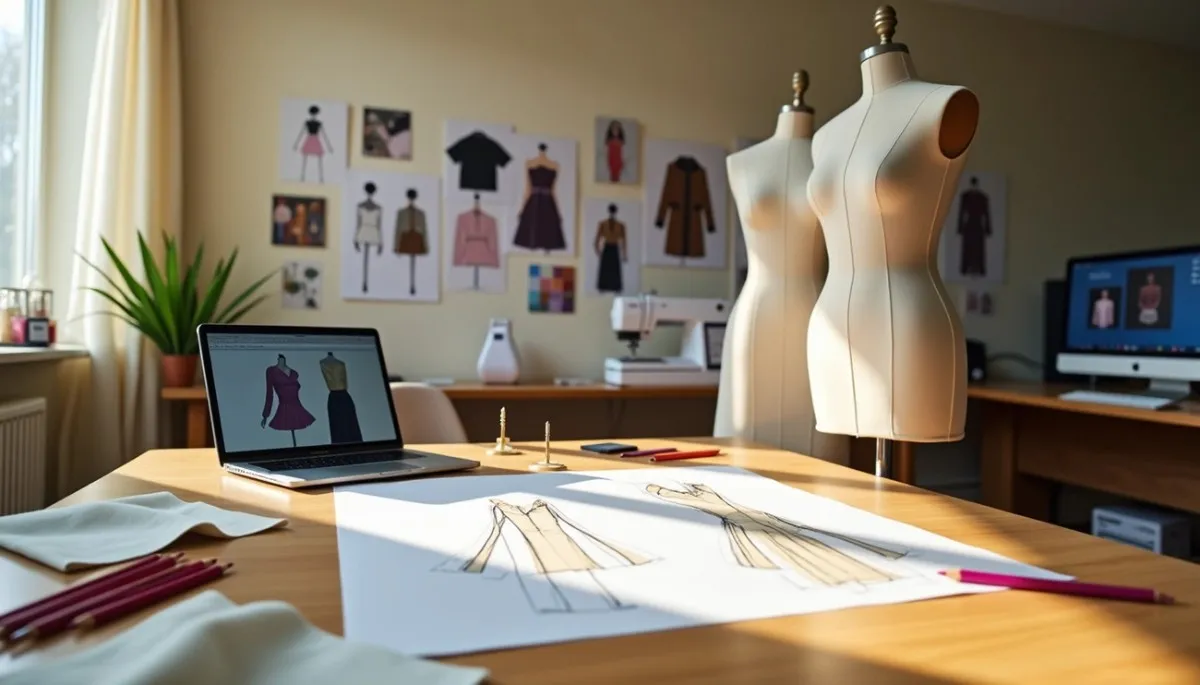

Why Practical Training Matters in Fashion Design Education
Fashion design is a very hands-on, competitive, and fast-paced industry. True mastery starts when concepts are put into practice, even though theoretical modules, textbooks, and academic lessons serve as a foundation. Fashion is a craft to be practiced, not merely a topic to learn. For budding designers, here is when hands-on experience gained through workshops, internships, and lab-based education becomes crucial. Experience, repeated skill development, experimentation, and guided practice create the link between classroom learning and practical industry application.
Aspiring designers now look for educational institutions that offer immersive exposure in addition to lecture-based instruction. This change is particularly evident in learning centers like Bangalore, where an increasing number of students are choosing to enroll in specialized fashion design courses, fashion design colleges, or fashion design institutes due to the city’s sophisticated studio-driven and industry-focused learning environment.
The Knowledge-Practice Gap in Fashion Design Education
Theory teaches concepts in fashion, but aptitude is unlocked through practice. Pupils may comprehend the construction of clothing on paper, but their learning is not complete until they create patterns, handle fabrics, and stitch seams. Whether a graduate spends months learning on the job or confidently enters a professional employment is typically determined by the gap between theoretical comprehension and operational capability.
Designers are expected to be quick problem solutions in the fashion industry. They have to make choices under pressure, adjust to customer demands, overcome production obstacles, and guarantee that the behavior, fit, and usefulness of the fabric match the original idea. Lectures alone cannot impart these crucial skills; repetition, introspection, and correction are necessary for their development.
The Shift Toward Skill-Oriented Fashion Education
Historically, fashion education leaned heavily on theoretical content: design theory, art history, textiles, and merchandising. While valuable, industry demands evolved rapidly pushed by technology, sustainability mandates, and changing consumer dynamics. Modern learning has shifted toward a hybrid model where hands-on training is integrated into almost every learning stage.
Fashion programs today, especially advanced fashion design courses in Bangalore, incorporate:
- Technology-driven pattern making
- Digital illustration
- Couture construction
- Fabric testing and textile experiments
- Fashion marketing and storytelling
- Access to industry mentorship
This progression reflects real-world expectations where designers must not only conceptualize but also produce technically accurate, aesthetically relevant, commercially viable garments.
Internships:
The First Step into the Professional World
Internships are often the turning point for fashion students. They provide exposure to actual workflows, timelines, and brand narratives. Instead of academic assignments, students are assigned real tasks sourcing fabrics, drafting technical sketches, supporting fittings, creating trims, and even coordinating with vendors.
This shift from simulated exercises to authentic roles builds discipline and confidence. It also nurtures essential soft skills communication, teamwork, time management, and client handling qualities just as critical as technical expertise.
For many, an internship becomes a gateway to full-time employment or brand collaboration opportunities. Employers frequently prioritize candidates who already possess workplace familiarity, making internship participation a competitive advantage for graduates from a fashion design college in Bangalore or any industry-oriented institute.
Workshops: Accelerating Learning Through Exposure
Workshops provide short, intensive learning experiences that expose students to new ideas, skills, and professional perspectives. These sessions are often led by visiting designers, trend forecasters, textile technologists, AI specialists, or brand consultants.
Workshops introduce students to:
- Emerging tools and technologies
- Experimental materials
- Sustainable fabrication practices
- Draping innovations
- Fashion entrepreneurship models
- Runway planning and production
Students get the chance to create, test, and refine concepts in a safe, structured, and professionally guided environment. For example, learning AI-powered design tools or 3D fashion modeling during workshops ensures students stay aligned with global changes—making them future-ready.
These sessions help budding designers think beyond classroom boundaries and push creative limits without fear of failure.
Labs:
Where Ideas Become Tangible Outputs
Fashion design laboratories act as practical learning hubs where students prototype ideas, experiment with textiles, and polish their craft. Labs are essential because they help students fully experience materials weight, drape, stretch, texture, and technical behavior.
Key lab-based learning areas include:
- Textile testing labs
- CAD pattern-making studios
- Draping and couture construction rooms
- Industrial sewing and machinery workshops
- Fabric dyeing, printing, and surface embellishment spaces
Through practice, students learn how fabrics respond to manipulation, how seams behave under tension, how patterns scale differently on body types, and how aesthetic choices affect structural integrity.
Trial-and-error is encouraged because fashion is as much engineering as artistry.
Portfolio Development: Turning Practice into Professional Identity
One of the biggest advantages of hands-on learning is how it transforms raw practice into industry-ready portfolios. A strong portfolio is a designer’s voice, identity, and proof of capability.
Through internships, lab sessions, and workshops, students build:
- Garment prototypes
- Digital and hand-drawn illustrations
- Pattern and draping assignments
- Textile samples and fabrication experiments
- Style boards and concept narratives
Recruiters in the fashion industry rarely hire based solely on academic scores—but they do hire based on portfolio impact. This is another reason why students often prioritize joining a fashion design institute in Bangalore—where lab facilities, industry partnerships, and hands-on structure support exceptional portfolio development.
Building Industry-Ready Competence
The fashion industry is fiercely competitive. Designers are expected to move from idea to execution swiftly and accurately. Practical experience gives students the ability to navigate:
- Product development cycles
- Production timelines
- Supply chain dependencies
- Fabric sourcing challenges
- Trend forecasting implementation
- Client feedback mechanisms
Students who graduate with practical experience express ideas better, negotiate decisions with clarity, and adapt to real-world requirements effortlessly.
Instead of hesitating, they begin their careers with confidence.

Soft Skills Refined Through Applied Training
Fashion education is not limited to stitching or illustration. It develops the mindset required to thrive under pressure. Hands-on training organically cultivates:
- Professional communication
- Collaboration and teamwork
- Leadership and creative delegation
- Responsibility and accountability
- Time and project management
- Critical thinking and emotional resilience
Students learn to accept feedback constructively and revise their work until it aligns with aesthetic, commercial, and functional standards. This emotional and cognitive maturity is invaluable in any design career.
Practical Experience Enhances Creative and Technical Intelligence
Design thinking is a cycle research, conceptualize, prototype, test, refine, finalize. Practical training reinforces this cycle, allowing students to think critically while balancing innovation with feasibility.
They learn how inspiration becomes reality through precise planning, execution, and refinement.
This is where theory and creativity merge into craftsmanship.
Why Bangalore Is Emerging as a Fashion Learning Hub
Bangalore has quickly evolved into a center for design education. With its tech-driven ecosystem, global exposure, design-centric community, and industry access, it attracts aspiring designers across India.
Students choose a fashion design college in Bangalore or a fashion design institute in Bangalore because:
- Studios and labs are industry-standard
- Courses include internships and experiential modules
- Mentorship comes from designers, stylists, technologists, and brand leaders
- The city fosters creativity, innovation, and cultural diversity
This environment creates the perfect launchpad for ambitious fashion students.
Conclusion:
Fashion is a discipline where execution defines talent. Practical training whether through internships, labs, or workshops turns classroom theory into skill, confidence, and professional readiness.
The future belongs to designers who can innovate, adapt, and execute. Those who gain experience early will always have an advantage over those who rely solely on theory. Hands-on learning empowers students to enter the professional world not as beginners but as capable emerging designers with vision, skill, and readiness.
In a world where creativity must meet functionality, practical exposure is not just helpful; it is essential. Fashion education becomes meaningful when learners are not just taughtbut trained.