
Skills Every Fashion Design Student Must Learn
Picture yourself scrolling through job postings for fashion designers. You’ll notice something interestingfashion designing roles today ask for skills that weren’t even mentioned five years ago. Adobe Illustrator, sustainable design practices, 3D modeling software. In fact, 78% of design positions opening in 2026 will require digital abilities alongside traditional skills.
Here’s what I’ve learned from working with fashion students: the most successful ones aren’t just great at sketching (though that’s still essential). They understand that today’s consumers care deeply about sustainability, innovation, and authentic storytelling. Your beautiful sketch means nothing if you can’t translate it into a garment that reflects these values.
Think about your favorite fashion piece right now. Chances are, its creator mastered far more than just drawing. They understood fabric behavior, could use digital tools, knew their target market, and probably had a solid grasp of business fundamentals too. Fashion sketching remains your creative foundation, but it’s just one piece of a much larger puzzle.
Even incredibly talented designers can find themselves struggling if they’re missing key skills from their toolkit. You might create stunning designs, but without understanding textiles, your garments could fail. You could have amazing technical abilities, but without business sense, your brand might never take off.
Fashion programs worldwide recognize this shift. They’re updating their courses to prepare you for a field where creativity meets technology, where art intersects with commerce, and where your personal vision needs to align with real-world demands.
Whether you’re just starting to explore fashion design or you’re already knee-deep in your studies, this guide will walk you through the ten skills that truly matter. These aren’t just nice-to-have abilities they’re the foundations that will help you build a successful career in this exciting, ever-changing industry.
What Fashion Design Really Means Today
Fashion design used to be straightforward create beautiful clothes that people wanted to wear. Today, it’s become something much richer and more complex. At its heart, fashion design still combines artistry with function, applying design principles, aesthetics, and construction techniques to create garments and accessories. But the modern fashion designer’s role has expanded far beyond the traditional sketch-to-garment process.
Think of today’s fashion designers as creative problem-solvers. They craft everything from your everyday jeans to red-carpet gowns, jewelry collections, and accessories, often focusing on specific product categories where they can develop deep expertise. Their job involves much more than creating beautiful things they’re constantly reading the room, anticipating what consumers will want next, and balancing functionality with visual appeal.
What Fashion Designing Actually Covers
When you step into fashion design, you’re entering a field that requires you to think about your target customer’s lifestyle, the occasions they dress for, and how your piece will fit into their existing wardrobe. You’ll find yourself making countless decisions about materials, colors, patterns, and styles, all while staying true to your creative vision.
The scope has grown tremendously. Fashion design now spans global retail networks, online platforms, and specialized niches that didn’t exist a decade ago. Modern fashion programs recognize this reality they teach both innovation and business fundamentals because you’ll need both to succeed. Career paths have multiplied too, opening doors to textile design, jewelry creation, styling, merchandising, and fashion consultation.
How the Industry Changed (And What It Means for You)
Here’s something that might surprise you: fashion in 2026 looks dramatically different from just five years ago. The industry is reshaping itself around new technologies, changing consumer expectations, and global market shifts.
Consider this over 35% of fashion executives now use AI for customer service, creating images, writing copy, and helping customers discover products. Meanwhile, 3D modeling software helps designers create and test samples digitally before making physical prototypes, cutting waste and speeding up development.
The industry wants people who can bridge traditional craftsmanship with new technology. Success increasingly depends on what experts call “AI literacy” your ability to work with and direct artificial intelligence systems. It sounds futuristic, but it’s happening right now.
Some encouraging numbers: the Indian textiles and apparel market is growing at 10% annually and could reach US$29,533.16 billion by 2030. India remains the world’s third-largest exporter of textiles and apparel, with exports expected to hit US$8,438.05 billion.
Several major shifts are reshaping how fashion works:
- Sustainability isn’t optional anymore: Designers now prioritize eco-friendly materials, innovative production methods, and timeless designs that reduce environmental impact.
- Digital experiences are standard: Virtual try-ons, digital design tools, and AI-powered trend forecasting have moved from experimental to everyday practice.
- Shopping happens everywhere: The lines between online and physical retail continue blurring, creating seamless experiences for consumers.
Success belongs to brands and designers who can adapt quickly to constant change. While overall industry growth may be modest in 2026, opportunities abound for innovative designers who embrace new tools while maintaining fashion’s creative heart.
The career outlook remains steady, with fashion design jobs projected to grow 5% from 2025 to 2033. Fashion education is evolving accordingly, balancing traditional design skills with technological proficiency to prepare students for this dynamic landscape.
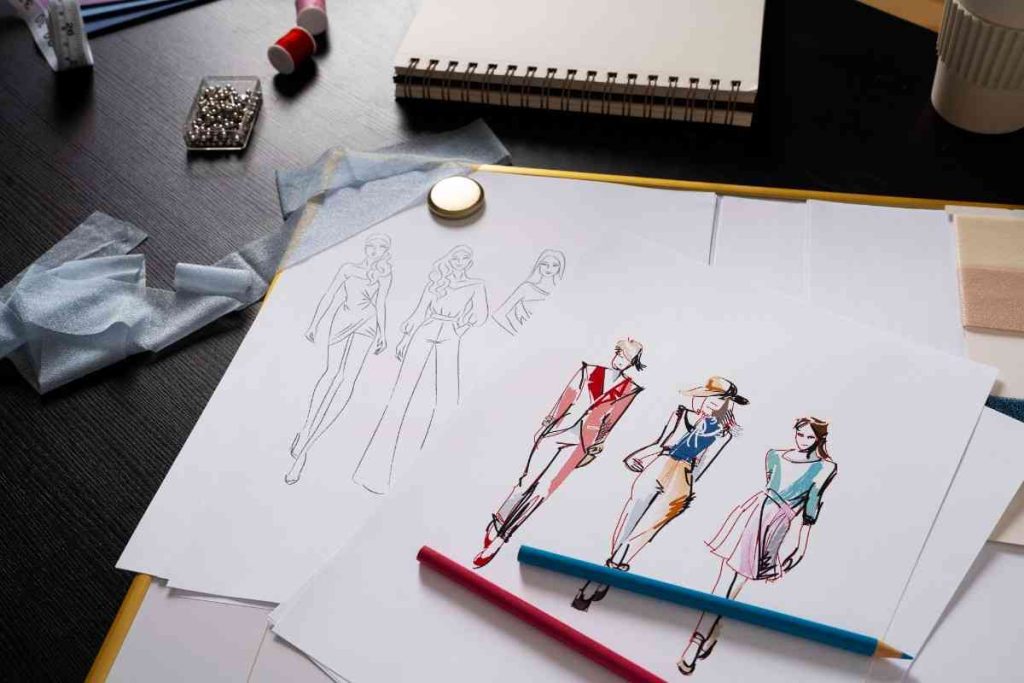
Fashion Illustration and Concept Sketching
Picture yourself scrolling through job postings for fashion designers. You’ll notice something interesting fashion designing roles today ask for skills that weren’t even mentioned five years ago. Adobe Illustrator, sustainable design practices, 3D modeling software. In fact, 78% of design positions opening in 2026 will require digital abilities alongside traditional skills.
Here’s what I’ve learned from working with fashion students: the most successful ones aren’t just great at sketching (though that’s still essential). They understand that today’s consumers care deeply about sustainability, innovation, and authentic storytelling. Your beautiful sketch means nothing if you can’t translate it into a garment that reflects these values.
Think about your favorite fashion piece right now. Chances are, its creator mastered far more than just drawing. They understood fabric behavior, could use digital tools, knew their target market, and probably had a solid grasp of business fundamentals too. Fashion sketching remains your creative foundation, but it’s just one piece of a much larger puzzle.
Even incredibly talented designers can find themselves struggling if they’re missing key skills from their toolkit. You might create stunning designs, but without understanding textiles, your garments could fail. You could have amazing technical abilities, but without business sense, your brand might never take off.
Fashion programs worldwide recognize this shift. They’re updating their courses to prepare you for a field where creativity meets technology, where art intersects with commerce, and where your personal vision needs to align with real-world demands.
Whether you’re just starting to explore fashion design or you’re already knee-deep in your studies, this guide will walk you through the ten skills that truly matter. These aren’t just nice-to-have abilities they’re the foundations that will help you build a successful career in this exciting, ever-changing industry.
What Fashion Design Really Means Today
Fashion design used to be straightforward create beautiful clothes that people wanted to wear. Today, it’s become something much richer and more complex. At its heart, fashion design still combines artistry with function, applying design principles, aesthetics, and construction techniques to create garments and accessories. But the modern fashion designer’s role has expanded far beyond the traditional sketch-to-garment process.
Think of today’s fashion designers as creative problem-solvers. They craft everything from your everyday jeans to red-carpet gowns, jewelry collections, and accessories, often focusing on specific product categories where they can develop deep expertise. Their job involves much more than creating beautiful things they’re constantly reading the room, anticipating what consumers will want next, and balancing functionality with visual appeal.
What Fashion Designing Actually Covers
When you step into fashion design, you’re entering a field that requires you to think about your target customer’s lifestyle, the occasions they dress for, and how your piece will fit into their existing wardrobe. You’ll find yourself making countless decisions about materials, colors, patterns, and styles, all while staying true to your creative vision.
The scope has grown tremendously. Fashion design now spans global retail networks, online platforms, and specialized niches that didn’t exist a decade ago. Modern fashion programs recognize this reality they teach both innovation and business fundamentals because you’ll need both to succeed. Career paths have multiplied too, opening doors to textile design, jewelry creation, styling, merchandising, and fashion consultation.
How the Industry Changed (And What It Means for You)
Here’s something that might surprise you: fashion in 2026 looks dramatically different from just five years ago. The industry is reshaping itself around new technologies, changing consumer expectations, and global market shifts.
Consider this over 35% of fashion executives now use AI for customer service, creating images, writing copy, and helping customers discover products. Meanwhile, 3D modeling software helps designers create and test samples digitally before making physical prototypes, cutting waste and speeding up development.
The industry wants people who can bridge traditional craftsmanship with new technology. Success increasingly depends on what experts call “AI literacy” your ability to work with and direct artificial intelligence systems. It sounds futuristic, but it’s happening right now.
Some encouraging numbers: the Indian textiles and apparel market is growing at 10% annually and could reach US$29,533.16 billion by 2030. India remains the world’s third-largest exporter of textiles and apparel, with exports expected to hit US$8,438.05 billion.
Several major shifts are reshaping how fashion works:
- Sustainability isn’t optional anymore: Designers now prioritize eco-friendly materials, innovative production methods, and timeless designs that reduce environmental impact.
- Digital experiences are standard: Virtual try-ons, digital design tools, and AI-powered trend forecasting have moved from experimental to everyday practice.
- Shopping happens everywhere: The lines between online and physical retail continue blurring, creating seamless experiences for consumers.
Success belongs to brands and designers who can adapt quickly to constant change. While overall industry growth may be modest in 2026, opportunities abound for innovative designers who embrace new tools while maintaining fashion’s creative heart.
The career outlook remains steady, with fashion design jobs projected to grow 5% from 2025 to 2033. Fashion education is evolving accordingly, balancing traditional design skills with technological proficiency to prepare students for this dynamic landscape.
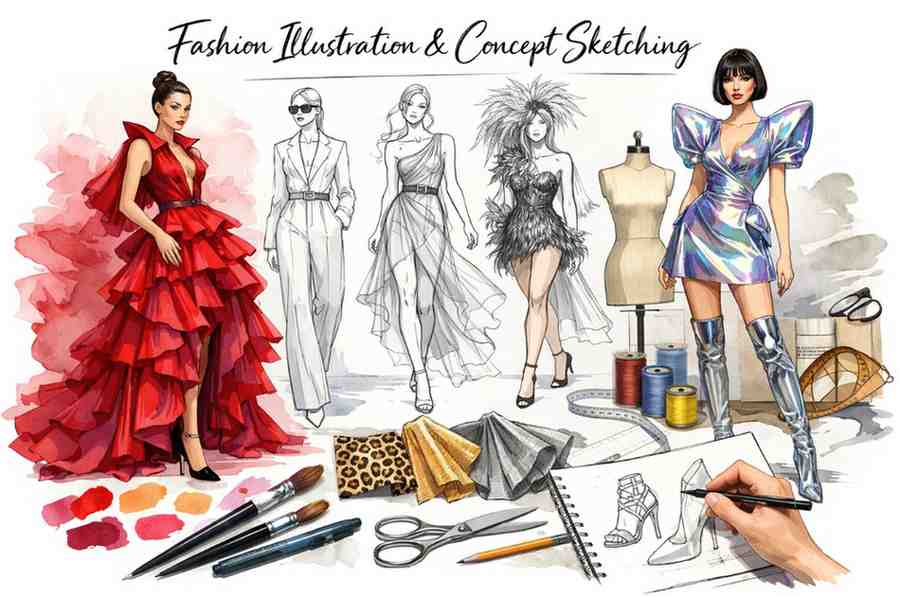
Fashion Illustration and Concept Sketching
Remember playing with paper dolls as a kid? You’d fold paper, cut out shapes, and somehow create clothes that fit your doll perfectly. Pattern making works on the same principle, except now you’re creating blueprints for real clothes that fit real people. It’s where your creative sketches meet the practical world of construction.
Pattern construction might seem intimidating at first, but think of it as problem-solving with fabric. You’re essentially asking yourself: “How do I turn this flat piece of cloth into something that wraps around a three-dimensional body?” The answer lies in understanding both precision and spatial relationships.
Creating basic blocks and slopers
Your journey starts with something called blocks or slopers—and these will become your best friends. Think of them as the foundation of a house. You wouldn’t build rooms without a solid foundation, and you shouldn’t create designs without solid blocks.
Here’s what makes blocks special: they’re completely basic. No fancy details, no seam allowances, no style lines. They exist for one purpose only—to fit a body perfectly. It’s like having a custom-made template that you can use over and over again.
You’ll work with three main types:
- Bodice block: Your go-to for anything that covers the torso—shirts, dresses, jackets
- Skirt block: The foundation for all things that hang from the waist
- Trouser block: Your starting point for pants, shorts, and anything with legs
Creating your first block takes patience and careful measurement. You’ll draft, cut muslin, fit it on a body, make adjustments, and repeat until it’s just right. This process teaches you something invaluable—how flat patterns translate into three-dimensional shapes.
Once you have a good block, you’ll use it for every new design. Instead of starting from scratch each time, you’ll modify your proven foundation. It’s like having a reliable recipe that you can adjust for different flavors.
Draping on mannequins for fit and flow
Now, let’s talk about draping—the more artistic cousin of flat pattern drafting. Instead of working with paper and rulers, you’re sculpting directly with fabric on a dress form. It’s like being a fabric sculptor.
This approach lets you see immediately how your design will look and move. You can watch the fabric fall, see where it pulls or bunches, and adjust in real-time. It’s especially helpful when you’re working with flowing fabrics or creating designs with lots of movement.
You’ll need some basic tools: a dress form, muslin fabric, pins, scissors, measuring tape, and pattern paper. Start by marking important lines on your dress form with tape—think of these as your guideposts.
The actual draping process flows in five clear steps. First, you’ll pin your fabric at key points like the shoulder and center front. Then comes the fun part—sculpting and shaping the fabric around the form. You’ll step back frequently, checking the fit and proportions from every angle. When you’re happy with the shape, you’ll mark all your important lines directly on the fabric. Finally, you’ll remove the fabric and transfer those markings to create a flat pattern.
If you’re just starting out, consider practicing on a half-scale dress form first. It’s more affordable, and the skills you learn on the smaller scale translate perfectly to full-size work.
Both pattern making and draping teach you to think in three dimensions while working with two-dimensional materials. These skills—spatial thinking, problem-solving, and technical precision—will serve you well throughout your design career.
Garment Construction and Sewing Techniques
There’s a moment every fashion student faces when they realize their beautiful sketch needs to become a real garment. You might have mastered drawing techniques and understand fabric properties, but can you actually sew your vision into existence? This is where garment construction separates dreamers from doers. Understanding fabric behavior alongside construction techniques creates the foundation for bringing your fashion visions to life.
Essential machine skills
Your sewing machine becomes your closest ally in garment creation. Just like learning to drive, you need to understand both the basics and the nuances of your equipment. Home sewing machines work perfectly for beginners and simple projects, while commercial machines offer the speed and power needed for professional-level work. Specialized machines like sergers and embroidery units each serve specific purposes in your construction toolkit.
Getting familiar with your machine’s anatomy makes everything smoother. The key components you should know include:
- Presser foot: Keeps your fabric steady as you sew
- Feed dogs: Those textured metal teeth that guide fabric through
- Tension disks: Control how tight or loose your stitches appear
- Bobbin case: Holds the bottom thread that creates your stitch
Regular maintenance keeps your machine running like new. Clean out lint after every few projects, oil the moving parts according to your manual, and match your needle and thread to your fabric type. These small habits prevent frustrating breakdowns and ensure consistent stitch quality.
The relationship between your needle, thread, and stitch length affects every seam you create. Learning to adjust these elements for different fabrics is what separates confident sewers from beginners who struggle with puckered seams and skipped stitches.
Finishing techniques for professional results
You know that satisfying moment when you turn a garment inside out and everything looks as polished as the outside? That’s the mark of thoughtful garment construction. Professional finishing techniques might be invisible to most people, but they’re what makes a garment feel expensive and well-made.
Seam finishing determines both how your garment looks and how long it lasts. You have several options:
- Simple finishes: Basic techniques like serging or zigzag stitching that prevent fraying
- Enclosed finishes: More refined methods like French seams or bound edges that completely hide raw fabric edges
Never underestimate the power of pressing. A good iron and proper pressing technique can transform your work, giving fabric the structure and crispness that careful stitching alone can’t achieve. This step shapes collars so they lie flat, makes seams sharp and clean, and gives your finished piece that professional polish.
Pay attention to closures early in your planning process. Zippers, buttons, and hooks aren’t just functional—they’re design elements that can enhance or detract from your overall vision. Planning their placement and application from the start ensures they integrate seamlessly into your design.
The fashion industry has noticed a concerning trend: graduates who can sketch beautifully but struggle to construct actual garments. Despite thousands of fashion students entering the field each year, many lack the hands-on skills to turn their designs into reality. This gap between creative vision and technical ability explains why construction skills remain so valuable for your career success.
Digital Tools: CAD and 3D Fashion Design
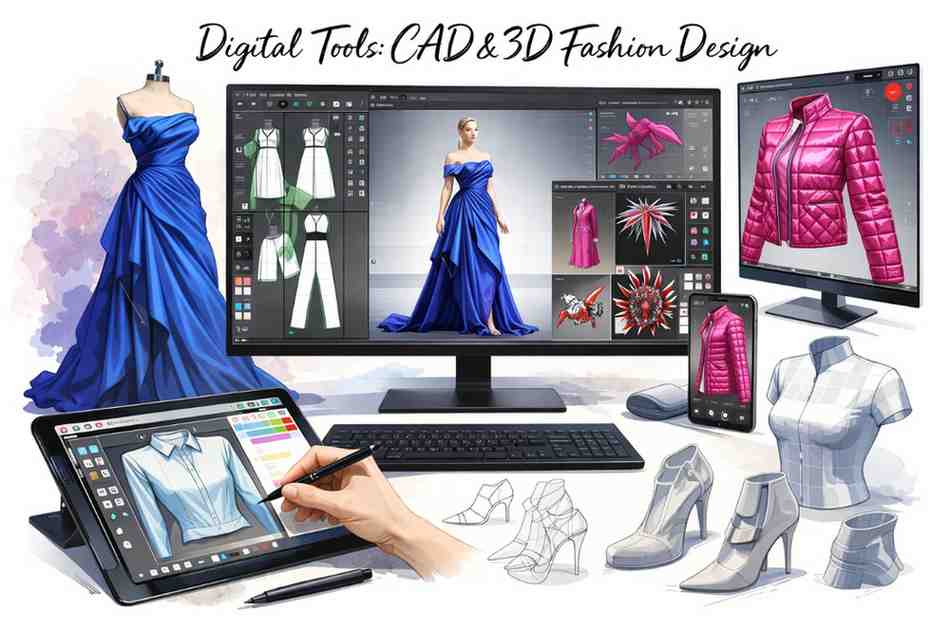
Walk into any fashion studio today and you’ll see something that would have seemed impossible just a decade ago designers creating entire collections without touching a single piece of fabric. Digital tools have become as essential as your sketch pad, and mastering them can set you apart from other candidates when you’re job hunting.
Learning Adobe Illustrator and CLO3D
Adobe Illustrator might seem intimidating at first, but think of it as your digital drafting table that never runs out of space. This software has become the industry standard because it creates vector graphics—images that stay crisp whether you’re viewing them on your phone or printing them on a billboard.
With Illustrator, you can create:
- Technical flats that manufacturers actually use for production
- Clean, professional sketches that scale to any size
- Fabric patterns and repeat designs
- Complete tech packs with all the details factories need
The beauty of working digitally is precision. Your lines stay exactly where you put them, colors remain consistent, and you can duplicate elements perfectly. Think of it as having a conversation with manufacturers in their preferred language—clean, technical drawings that leave no room for misinterpretation.
CLO3D takes things a step further by letting you see your designs come to life in three dimensions. This software creates virtual garments that move, drape, and fit just like real clothes would. You can:
- Build 3D garments from your flat patterns
- Test different fabrics without ordering samples
- Watch how your designs move on virtual models
- Create realistic presentations for clients or your portfolio
Many schools now offer CLO3D courses that walk you through everything from basic pattern manipulation to advanced surface design. The learning curve might feel steep initially, but the software includes tutorials that make complex concepts more manageable.
Benefits of virtual prototyping
Here’s where digital tools really shine: they solve real problems you’ll face in your career. Virtual prototyping cuts prototype costs by about 70%, which means you can experiment with more ideas without burning through your budget.
But the benefits go beyond saving money. You can perfect your designs digitally before cutting into expensive fabrics, reducing waste significantly. Some designers report cutting their physical sample needs by 80-90% using 3D platforms.
The collaborative aspect is equally valuable. When you’re working with pattern makers in one city and manufacturers in another, digital files make communication seamless. Everyone sees exactly the same design, reducing costly mistakes that come from misunderstandings.
Fashion schools across India recognize this shift and now teach these digital skills alongside traditional techniques. Students who graduate with both hand skills and digital fluency find themselves at a real advantage—they can speak the language of both creativity and technology, which is exactly where the industry is headed.
Sustainability in Fashion Design
You’ve probably heard that fashion is one of the world’s biggest polluters. The numbers are sobering—the industry contributes about 1% of crude oil production just for synthetic fibers. But here’s the thing: as a fashion design student, you’re perfectly positioned to be part of the solution.
Understanding sustainable design isn’t just about being environmentally conscious anymore. It’s about staying relevant in an industry where consumers increasingly vote with their wallets for brands that align with their values.
Eco-friendly materials and processes
Let me walk you through some fabric alternatives that are changing the game. These aren’t just “nice-to-have” options—they’re becoming the standard that smart designers embrace:
Organic and recycled cotton cuts down on resources while avoiding the harsh chemicals that conventional cotton relies on. Think of it as cotton with a conscience.
Hemp grows like a weed (because it practically is one), needs almost no water, and doesn’t require pesticides. Your grandmother might remember when hemp was everywhere—and she was onto something.
Linen comes from flax plants that actually improve soil health while they grow. Plus, linen gets better with age, just like a good friendship.
Tencel and Lyocell are made from wood pulp in what’s called a closed-loop system—meaning the water gets recycled and reused, with no toxic chemicals making their way into waterways.
Piñatex turns pineapple leaves (which would otherwise be waste) into leather-like material. It’s clever innovation that solves two problems at once.
Here’s what’s exciting: only 8% of textile fibers currently come from recycled sources, with less than 1% from textile-to-textile recycling. This represents a huge opportunity for creative minds like yours to make a real difference.
Designing for longevity and reuse
Smart designers today think beyond the initial sale. They ask: “How can I create something people will love and wear for years?”
Research shows that doubling a garment’s lifetime can reduce its environmental impact by nearly half. That’s a powerful motivator to design pieces that last.
Physical durability starts with choosing quality materials and reinforcing the areas that get the most stress—seams, elbows, hems. But longevity goes deeper than construction.
Consider designing pieces with timeless appeal. Classic silhouettes and versatile color palettes don’t go out of style. Think about that perfect white shirt or well-cut blazer in your closet—they work year after year because they’re fundamentally well-designed.
There’s also emotional durability to consider. When you design pieces that tell a story or incorporate personal meaning, people form attachments. They’re less likely to discard something that feels meaningful.
Circular manufacturing principles encourage you to think about the entire lifecycle of your designs. How might someone repair, alter, or even upcycle your piece when they’re ready for something new?
The reality is that sustainability isn’t optional anymore in fashion education. The students who embrace these principles now will be the designers who thrive in tomorrow’s industry.
Fashion Business and Brand Building
You might think fashion is all about creativity, but here’s the reality: even the most talented designers need business skills to succeed. The fashion world is full of incredibly creative people whose brands never took off because they didn’t understand the commercial side of things.
What is fashion designing course with business focus?
Fashion design programs with business focus teach you to think like both an artist and an entrepreneur. Instead of just learning to sketch and sew, you’ll dive into subjects like History of Fashion, Finance, Marketing & Communication, Buying & Merchandising, and Management Control.
These programs recognize something important: today’s fashion industry needs people who can bridge the creative and business worlds. At schools like Istituto Marangoni, you’ll develop both your artistic vision and your strategic thinking skills. You’ll learn to read financial reports just as easily as you interpret color trends.
What makes these programs particularly relevant now is their focus on emerging technologies. You’ll explore Web3, Artificial Intelligence & Smart Technologies—knowledge that positions you ahead of designers who only understand traditional business models. Graduates often find themselves qualified for roles ranging from creative positions to retail management, supply chain coordination, and buying.
Creating a brand story and identity
Your brand story isn’t marketing fluff—it’s the foundation that makes people care about your work. Think about brands you love. Chances are, you connect with their story, not just their products. Your brand story should answer three simple questions: Who are you? What do you believe in? Why does your business exist?
Building an effective brand identity requires some practical steps:
- Figure out what makes your designs different from everyone else’s
- Understand exactly who you’re designing for
- Write a clear mission statement that reflects your values
Your visual identity—logo, colors, fonts—needs to work across everything from your website to your Instagram posts. Consistency matters because it helps people recognize and remember your brand. Choose elements that genuinely reflect your brand’s personality, not just what looks trendy.
Basics of fashion entrepreneurship
Fashion entrepreneurship means spotting opportunities, creating innovative designs, and taking calculated risks to build a business. You’ll need a solid business plan that covers your brand identity, market research, financial projections, and how you’ll actually run day-to-day operations.
Successful fashion entrepreneurs master both sides of the equation—they can design beautiful clothes and run profitable businesses. The best business-focused fashion programs teach you practical skills in finance, marketing, and management alongside your creative training. Many students launch their own projects within months of graduation, proving these programs provide real-world applicable knowledge.
Your entrepreneurial path might lead to launching your own fashion label, opening a boutique, building an online store, or starting a production company. Whatever direction you choose, understanding both the creative and business aspects of fashion gives you the foundation for long-term success in this competitive field.
Trend Forecasting and Consumer Insights
Ever wondered how designers seem to know exactly what you’ll want to wear next season? It’s not magic—though sometimes it feels like it. Successful fashion designers develop this skill of reading the future, combining creative intuition with smart data analysis to predict what consumers will crave before they even know it themselves.
How to read market signals
Think of trend forecasting as detective work. You’re gathering clues from multiple sources to solve the mystery of what people will want next. Your toolkit includes two main types of evidence: hard numbers and human emotions.
The numbers tell one story. Quantitative research gives you concrete facts—sales figures, website clicks, purchase patterns—usually displayed in charts and graphs that reveal emerging trends. But numbers alone won’t give you the full picture.
That’s where the human element comes in. Qualitative research digs into feelings and preferences through conversations, social media observations, and understanding what makes people connect with certain styles. You might spend hours scrolling through Instagram, watching how people respond to different looks, or having coffee chats with potential customers.
Most professionals use a mix of both approaches. Some start by studying fashion shows to spot what might trickle down to everyday wear—that’s the top-down method. Others watch influencers, street style, and social media to see what’s bubbling up from real people—the bottom-up approach. The smartest forecasters combine both perspectives with solid data analysis.
Using data and AI for predictions
Modern technology has changed how we spot trends, making it possible to process enormous amounts of information quickly. These systems can analyze runway shows, sales data, street photography, and millions of social media posts all at once, finding patterns that would take humans months to identify.
Some AI-powered platforms now scan over 3 million social media images every single day, picking out more than 2,000 different fashion details—everything from floral prints to specific color combinations. This helps brands fine-tune their collections and avoid the costly mistake of overproducing items that won’t sell, sometimes reducing excess inventory by 80-90%. These tools can catch trends when they’re just starting to emerge, giving you a head start in a fast-moving market.
But here’s the thing—technology is just a tool. As one industry expert puts it, “While our AI is extremely sophisticated, the human aspect still remains essential”. The most effective trend forecasting combines the analytical power of technology with human creativity, cultural understanding, and intuition about what feels right for the moment.
Your job as a designer isn’t to let algorithms make your creative decisions. It’s to use these tools as a starting point, then apply your own judgment, cultural awareness, and artistic vision to create something meaningful.
Portfolio and Career Preparation
Your portfolio is more than just a collection of your work—it’s your first impression, your story, and often your ticket into the fashion industry. Think of it as your personal sales pitch that needs to work even when you’re not in the room to explain it.
What to include in your portfolio
Here’s the truth about portfolios: quality always beats quantity. You want to show range without overwhelming your viewer. Start with a brief introduction—keep it to seven lines maximum—that explains your design philosophy and what drives your creativity.
Your portfolio should walk someone through your creative process:
- Research materials and trend analysis that show how you think
- Mood boards that reveal your conceptual development
- Fashion illustrations and sketches that demonstrate your technical skills
- Photographs of completed garments (because execution matters)
- Technical specifications and fabric swatches that prove attention to detail
For job applications, stick to 10-13 pages—enough to impress, concise enough to hold attention. Your personal portfolio can be longer, but remember that busy hiring managers appreciate focused presentations.
How to present your work to colleges or employers
Your cover page needs to grab attention immediately. Design something that makes them want to flip to the next page. Once you have their interest, consistency becomes key—choose a layout style and stick with it throughout.
Digital portfolios have become the standard, and honestly, they’re more practical than physical ones. They’re easier to share, update, and access. If you’re targeting fast-fashion brands, make sure your technical drawings are created using professional software rather than hand-drawn versions.
Networking and internships
Let me be direct about this: internships are invaluable, even if they start small. Volunteering to help backstage at fashion shows might seem unglamorous, but it gets you inside the industry and around professionals.
Use your student status to your advantage. Many professionals remember being in your shoes and are willing to offer guidance. Networking isn’t about collecting business cards at events—it’s about building genuine relationships through consistent, meaningful interactions.
The fashion industry runs on relationships and reputation. Your skills get you noticed, but your connections and professional relationships help you build a lasting career.
Conclusion
You’ve just walked through the ten skills that separate successful fashion designers from those who struggle to find their footing. Each one builds on the others—your sketching brings ideas to life, your fabric knowledge makes them wearable, your construction skills make them real, and your business sense makes them profitable.
Here’s what I want you to remember: these skills work best when they work together. Your gorgeous illustration means nothing if you pick the wrong fabric. Your perfect pattern falls flat without solid construction. Your amazing garment sits on the shelf without smart marketing. Fashion design success comes from being competent across all these areas, not just brilliant in one.
Start where you feel most comfortable, but don’t stay there. Maybe you love sketching—great! Use that passion to fuel your interest in learning about fabrics that will bring those sketches to life. Perhaps you’re drawn to sustainability—perfect! Let that guide you toward understanding both materials and business practices that support your values.
The fashion industry rewards people who can adapt and grow. You don’t need to master everything overnight, but you do need to stay curious about all of it. Take a class, watch tutorials, find a mentor, practice on your own projects. Every bit of knowledge you gain makes you more valuable and more confident.
Your portfolio will tell the story of this growth. Each project you include should show not just creativity, but also technical skill, practical thinking, and an understanding of who might wear what you’ve designed. Think of it as proof that you can handle whatever challenge the industry throws at you.
Fashion changes constantly, but these foundational skills remain essential. Build them now, keep refining them throughout your career, and you’ll find yourself ready for opportunities you might not even see coming yet. The industry needs designers who understand both the craft and the business—and now you know exactly what that means.
FAQs
Q1. What are the most crucial skills for a fashion designer to possess?
A fashion designer should master sketching, pattern-making, fabric knowledge, and digital design tools. Additionally, understanding business aspects, sustainability practices, and trend forecasting are essential for success in the modern fashion industry.
Q2. How important is sustainability in fashion design education?
Sustainability has become a critical component of fashion design education. Students are now taught to consider eco-friendly materials, circular manufacturing processes, and designing for longevity to minimize the environmental impact of the fashion industry.
Q3. What role does technology play in modern fashion design?
Technology plays a significant role in fashion design today. Proficiency in CAD software like Adobe Illustrator and 3D modeling tools like CLO3D is increasingly important. These digital tools enable designers to create, refine, and visualize collections more efficiently and sustainably.
Q4. How can fashion design students prepare for a successful career?
Students can prepare for a successful career by developing a strong portfolio, gaining practical experience through internships, networking within the industry, and staying updated on the latest trends and technologies. A combination of creative skills and business acumen is crucial.
Q5. Why is understanding textile behavior important for fashion designers?
Understanding textile behavior is crucial because it directly impacts how a garment will look, feel, and function. Knowledge of fabric properties helps designers choose appropriate materials for their designs, ensuring that the final product meets both esthetic and functional requirements.