
Fashion Illustration Tips for Beginners
Fashion illustration is the cornerstone of fashion design. Though the final garment or clothing design is important, for a designer to communicate their vision, a sketch is important. The drawing or illustration offers complete visualisation through the concept of storytelling. If your career choice is to become a fashion designer, having fashion illustration skills is imperative. Though a lot of people learn on their own or on YouTube, it would be ideal to secure formal training in the form of a fashion and apparel designing course. Since these courses deal with in-depth fashion design training, you will learn the various steps to bring a design to life on paper. As a nascent designer, you can communicate your creative vision to clients or professors by completing a successful illustration.
What is Fashion Illustration?
Fashion illustration is what helps turn a creative vision into a visual masterpiece. Illustrations include detailed sketches and drawings that help communicate a designer’s vision and ideas effectively. While designers can directly sketch the outfit on the croquis, they can also highlight certain elements if they wish to. This can be certain garment cuts, fabric flow, intricate pleats and so on. Fashion sketches are an important component of a garment creation journey. It’s important for aspiring designers to understand the importance of fashion illustration. When an illustration is well done, it can be converted successfully into wearable art.
Essential Fashion Illustration Tips for Beginners
Start with a Croquis
In fashion terminology, a croquis is the basic drawing of a model, a figure or a template on which you can draw your designs on. When you’re sketching your fashion ideas, you can trace it over again and again. You can either sketch the croquis on your own, or find them online and print them. You would have seen that most croquis are tall model forms. However, in case you’re looking at croquis that are beyond the norm such as child or plus-sized woman, it’s better to sketch your own. It’s best to focus on proportion before detail.
Choose the Right Tools
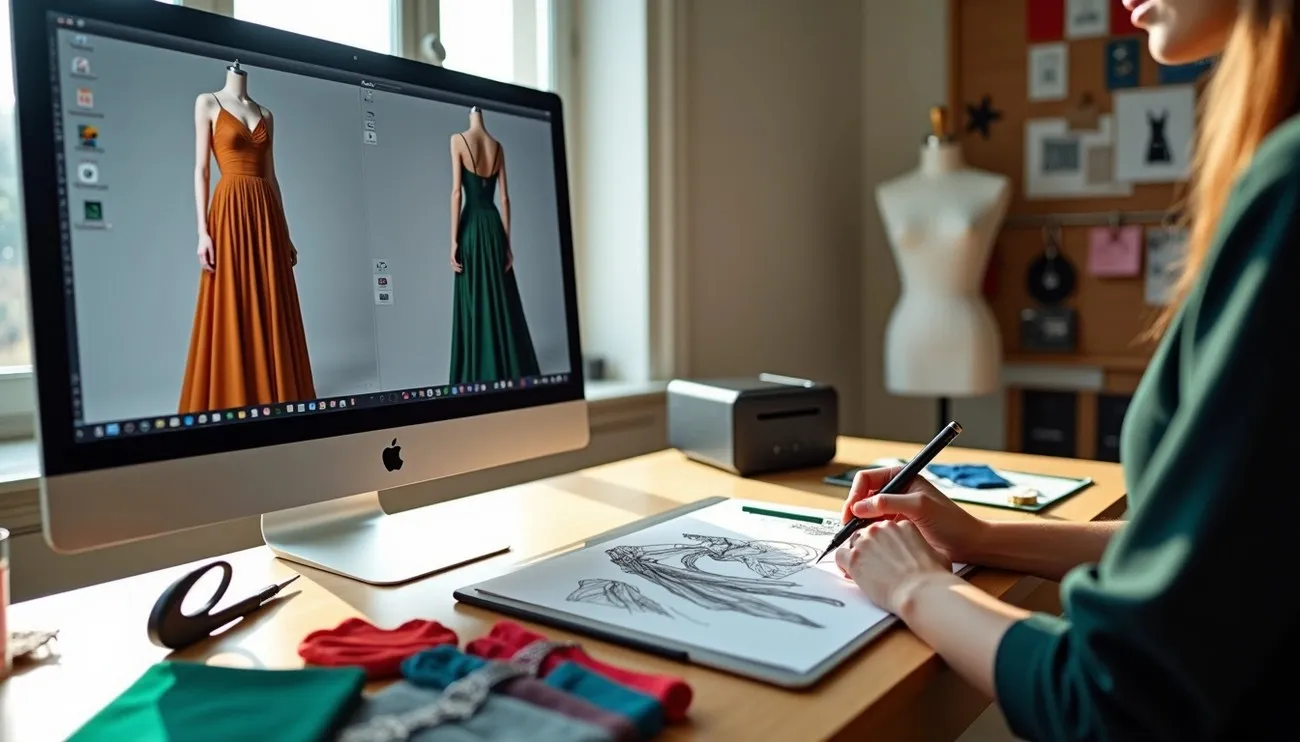
When it comes to choosing drawing tools, there are several options. You would want to draw your designs to the best of your ability. Thus, you may choose pens, markers, pencils, or any other medium you prefer. When you start your design journey, it’s best to invest in simple tools and upgrade as you grow. A few basic supplies you need to get your hands on are HB or 2B pencils, a kneaded eraser, a fine tip black pen or marker, coloured pencils and water colours for rendering. Though most designers even today prefer working with traditional tools, there are many new-age designers that like digital tools for sketching or illustration. Adobe Illustrator and Procreate are popular choices.
However, don’t be afraid to experiment with different tools. Also, you will need to have a sketchbook with smooth paper at all times.
Practice & Explore Body Proportions
In fashion illustrations, the figure you’re drawing is usually proportioned according to the size of the head. In an adult human, the size is anywhere between 7 to 8 head lengths. However, in fashion figures or models, the size is a bit exaggerated. This helps designers embrace different body types when they’re sketching. As an aspiring designer, it’s okay if you don’t get it right the first time. Instead of stressing, keep practicing. Sit in a quiet corner and enjoy practicing. This is the only way to grow and as you keep sketching, you will get the confidence.
Understand Fabric Manipulation Techniques
Anyone who sees the final illustration should be able to tell how the garment will behave on the body. Therefore, make sure you understand fabric movement and fabric manipulation thoroughly. During your fashion design program, keenly observe how fabric folds, stretches and flows on the body. This will help you create depth and realism. To make your fashion illustration look interesting, highlight details. For airy or flowy materials, use light lines whereas for structured fabrics, heavy strokes are better. You can also add texture to a figure with shading. This will help you communicate your design in a tactile way. When you start illustrating, creating shadows and highlights is of paramount importance.
Garment Details Matter
As an aspiring designer, you aim at selling your design idea with your illustration. Thus, make sure you emphasize key features. For instance, collars, sleeves and zippers can make your illustration look more realistic. However, one essential tip beginners should follow is that overcrowding is a complete no-no. Illustration clarity matters the most.
Develop a Unique Style
There is a difference between taking inspiration and completely copying someone’s designs. As a fashion illustrator, it’s always better to develop your own unique style. Have a signature characteristic which you can use across all your illustrations. This will differentiate you from your peers. For instance, do you plan to use watercolours or coloured pencils? The choice is yours. Highlighting details and elements will help you create a unique aesthetic. For clothing inspiration, you can even look at Pinterest.
Final Tip
Fashion illustration is a skill in which you will only get better with time. Practice sketching regularly to become a pro. You can even join online sketching challenges for added motivation. As a beginner, your first sketch doesn’t have to be perfect. Follow the right techniques and over a period of time, you will develop your own, unique style. To learn the nitty-gritties of fashion designing, enrol yourself in a private design college in India.