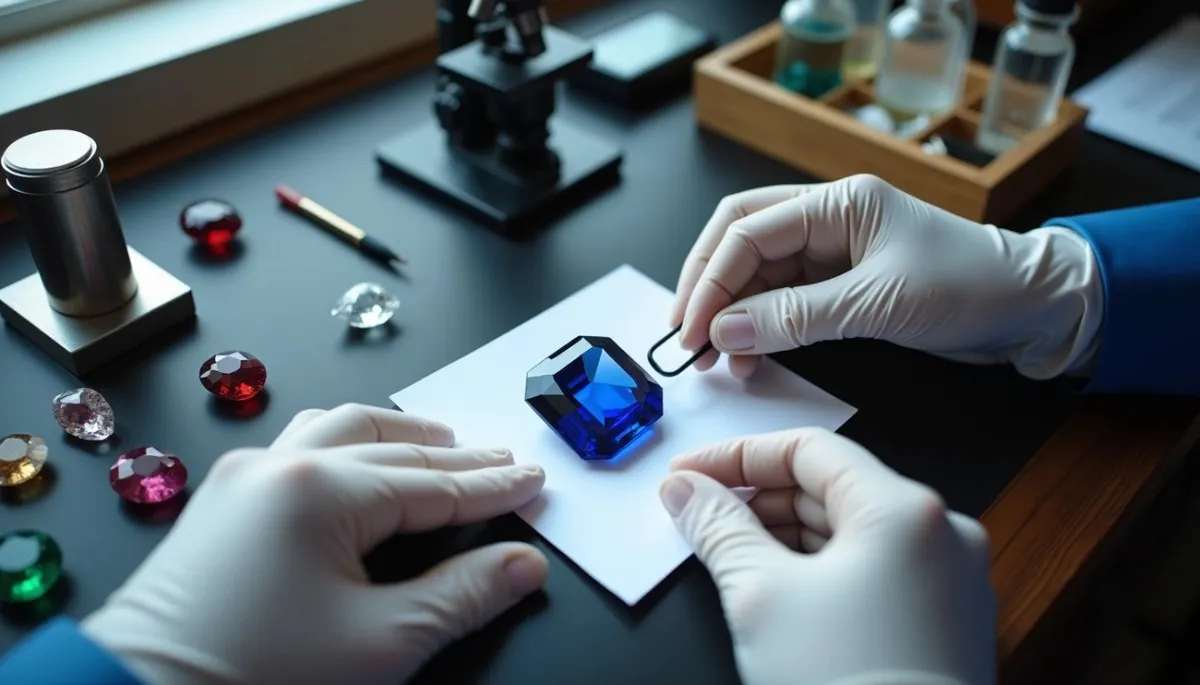

How to Become a Certified Gemologist: A Step-by-Step Career Guide
A career in gemology jobs can be quite rewarding, with entry-level positions starting at $30,000 per year. Specialized roles like Gemstone Appraisers can earn up to $70,000 annually.
Gemology is the scientific study of gemstones that helps professionals identify and analyze gem materials by studying their physical and optical properties, origins, and treatments. Gemologists play a vital role in the thriving gems and jewelry industry. They use specialized equipment to examine diamonds and evaluate precious stones’ color and shape.
The field shows remarkable growth potential, particularly in India. The country’s gems and jewelry sector makes up 29% of global jewelry consumption. Market projections indicate growth of $103.06 billion during 2019-2023. The overall exports have shown an impressive 93.77% growth rate in August 2021.
The surge in treatments and lab-grown gems over the last several years has created a strong need for qualified gemologists. This piece will give you the complete roadmap to become a certified gemologist. You will learn about educational requirements and career paths that align with your interests and skills.
What is Gemology and Why Become a Certified Gemologist
Gemology is a specialized branch of mineralogy that deals with the scientific study of natural and artificial gemstone materials. This discipline goes beyond casual observation and requires systematic analysis of gems through their physical properties and optical characteristics.
Understanding Gemology
Gemologists study gemstones by exploring their crystal structure, specific gravity, refractive index, and other optical properties. They use sophisticated tools like microscopes, computerized equipment, and specialized grading instruments to identify gems accurately. Spectroscopic analysis helps professionals determine a gem’s atomic structure and origin—vital factors that substantially affect its value. To cite an instance, a ruby from Myanmar (Burma) will show distinctly different internal and optical properties compared to one from Thailand.
Benefits of Gemology Certification
Getting professional certification gives you multiple advantages. We focused on providing credibility in the competitive jewelry industry. Certified gemologists can accurately identify gemstones, which prevents misrepresentation and fraud. On top of that, certification boosts consumer confidence, as buyers trust professionals who can verify gem authenticity and quality. The Gemological Institute of America (GIA) Graduate Gemologist program and the International Gem Society’s Professional Gemologist course are among many reputable certification programs.
Career Opportunities for Gemologists
The field offers various career paths for qualified professionals:
- Lab Gemologist: Research and assess gems using advanced equipment (₹3,375,218 to ₹5,484,729 annually)
- Gemstone Appraiser: Assess gem value combining market knowledge with scientific analysis (₹4,219,022 to ₹5,906,631)
- Jewelry Designer/Manufacturer: Create and produce jewelry pieces (₹1,687,609 to ₹4,640,924)
- Retail Specialist: Work directly with customers in jewelry stores (₹2,531,413 to ₹5,484,729)
- Auction Specialist: Handle precious gems at auction houses (₹4,219,022 to ₹5,484,729)
Wholesale buying, museum curation, and specialized writing about gemstones are other available options.
Industry Demand and Growth
Qualified gemologists are in high demand, and this trend continues to grow due to several factors. Luxury jewelry and precious stones have seen increased demand due to rising affluence in emerging markets. More consumer interest in ethically sourced gemstones has created specialized roles that focus on responsible mining and supply chain transparency. The industry has transformed through technological advances in gem identification and grading, creating new opportunities for tech-savvy professionals.
Educational Requirements for Becoming a Gemologist
Starting a gemology career needs specific educational qualifications and proper training from accredited institutions. Your career goals, location, and learning style will determine the best path for you.
Simple Eligibility Criteria
You need to be at least 18 years old to study gemology. Most schools require a higher school certificate (H.S.C)/10+2 or equivalent qualification for their simple gemology programs. B.Sc. programs in gemology need 12th-grade completion in the science stream. Students must have a relevant bachelor’s degree with a minimum 55% total score to join postgraduate courses. Since most internationally recognized courses are taught in English, you must be fluent in the language.

Gemology Courses and Programs
Gemology education ranges from short certificates to detailed degree programs:
- Bachelors Degree in Jewellery Design & Management – B.Sc (JDM) – 3 Years
- Graduate Diploma in Jewellery Designing & Management – 1 Year
- Certificate Course in Jewellery Design – CAD MATRIX – (CCAD-M) – 2 Months
- Certificate Course In Diamond Grading & Identification (CCDG) – 4 Months
- Certificate Course in Gemology – (CCG) – 4 Months
- Certificate Course in Rhino – 3D Jewellery Design – (CCR3D) – 4 Months
- Diploma in Jewellery Designing With CAD – (DJD-CAD) – 6 Months
Programs last anywhere from 6 months for certificates to 3 years for bachelor’s degrees. Students learn through lectures, practical exercises, lab work, and research projects that cover geology, mineralogy, crystallography, and gem identification techniques.
Best Gemology Institutes
Several prominent institutes lead the way in gemology education:
The Gemological Institute of America (GIA) offers the prestigious Graduate Gemologist program with detailed diamond and colored stone education. Gem-A (The Gemmological Association of Great Britain), a 115-year-old institution, provides internationally recognized diplomas. HRD Antwerp delivers European expertise through well-laid-out pathways from simple to advanced gemology. The International Gemological Institute (IGI) teaches various gemology courses about rough diamond grading, gemstone identification, and jewelry design.
Online Gemology Courses
Distance learning makes gemology education more accessible. GIA’s online programs match their on-campus curriculum through media-rich materials, and students can learn at their own pace. You can submit assignments and take exams online while getting support from instructors through email or phone. These programs require hands-on lab classes at specific locations to work with equipment and gem materials. Students can complete their courses at different speeds based on their schedules.
Gemology Degree vs Certificate Programs
Your career goals should guide your choice between degree and certificate programs. GIA’s Graduate Gemologist and similar certificate programs focus on technical skills and industry knowledge for quick entry into gemstone and jewelry sectors. University degrees give you broader education and more flexibility to change careers or move into management. Technical roles in gem identification and grading need certificates, but research positions and career growth often benefit from degrees. Many professionals get both to maximize their career opportunities.
Gemology Courses in India
India’s gemology education scene is vibrant. The International Institute of Gemology (IIG) has trained more than 100,000 graduates in specialized, skill-based programs. The Indian Institute of Gems and Jewelry, GIA India, and NIFT lead the education sector. Programs cost between ₹25,000 and ₹7,00,000 based on type and duration. You’ll need to clear entrance exams at several institutes, such as the NIFT Entrance Exam for jewelry design courses and department tests at universities like Aligarh Muslim University.
Step-by-Step Process to Become a Certified Gemologist
Your path to becoming a certified gemologist starts with your love for gemstones. A well-laid-out approach will give you the skills and credentials needed in this specialized field.
Step 1: Complete Your Simple Education
A high school diploma serves as your starting point for gemology. You don’t need a college degree, but strong science knowledge helps you excel in your studies.
Step 2: Choose the Right Gemology School
Look for accredited gemology schools that line up with what you want to achieve and can afford. The Gemological Institute of America (GIA) stands out with its globally recognized credentials. You might also want to check out the International Gem Society (IGS), the International School of Gemology (ISG), and Gem-A (Gemmological Association of Great Britain).
Step 3: Enroll in a Gemology Certificate Program
Pick a program that fits your career goals. The GIA Graduate Gemologist program gives complete training in diamonds and colored stones. You’ll work with actual gemstones under expert guidance and learn to grade both diamonds and colored stones.
Step 4: Develop Essential Gemologist Skills
Sharp attention to detail, good organization, and knowing how to take constructive criticism matter. Great gemologists stay curious about gems and keep up with new technologies and treatments in this field.
Step 5: Get Practical Experience Through Internships
Hands-on experience comes through internships. GIA offers paid research opportunities lasting one to two months. You’ll work on specific gemology projects with guidance from seasoned professionals.
Step 6: Get Professional Certification
Your certification program ends with written and practical tests. IGS certification needs you to pass three 100-question exams with 87% or higher scores. You’ll also need to identify and grade 15 gemstones with 93% accuracy in a practical test.
Step 7: Build Your Portfolio and Resume
Connect with fellow gemologists during your education and internships to build your professional network. Show off your expertise through a portfolio, perhaps using social media to highlight your professional growth.
Step 8: Apply for Gemologist Positions
Your certification and experience open doors to roles like appraiser, auction house jewelry specialist, colored stone buyer, diamond grader, lab professional, or retailer. Your specific certification and expertise point you toward the best career paths.
Career Paths and Job Opportunities for Gemologists
A certified gemologist can build a career in many sectors of the jewelry and gemstone industry. The specialized knowledge of gemstones creates opportunities for both technical and creative roles.
Lab Gemologist and Research Roles
Laboratory gemologists analyze gemstones with specialized equipment like microscopes, polariscopes, and refractometers. They study new gem discoveries, treatment processes, and detection methods in both field and laboratory settings. Their work involves identifying gemstones by physical properties and creating certification reports while maintaining quality standards. These professionals earn between ₹3,375,218 to ₹5,484,729 per year.
Gemstone Appraiser and Valuer
Gemstone appraisers determine gem values through careful examination. They blend their gemological expertise with current market knowledge, both local and global. The job requires creating detailed reports about gemstones’ characteristics for retail sales and insurance needs. This challenging field rewards professionals with salaries from ₹4,219,022 to ₹5,906,631.
Jewelry Designer and Bench Jeweler
Jewelry designers create wearable art with a focus on gemstone settings. Bench jewelers craft and fix fine jewelry with specialized skills. Both positions need a solid understanding of gems’ physical properties to create beautiful, lasting pieces. These creative professionals earn between ₹1,687,609 to ₹4,640,924 yearly.
Retail and Wholesale Opportunities
Retail gemologists guide customers through their gemstone and jewelry purchases while building lasting relationships. Wholesale buyers travel the world to select gemstones based on market trends. Success in these roles comes from strong communication skills and deep gemological knowledge.
Expected Salary and Growth Potential
New gemologists start at around ₹900,000 per year. Experience brings better pay – professionals with 1-4 years earn about ₹771,657, while those with 9-12 years reach ₹5.4 to ₹7.7 lakhs annually. Career growth often comes through employer changes, advanced education, or leadership roles managing junior gemologists.
Conclusion
A career in gemology opens exciting opportunities for anyone who loves precious stones. This piece explores everything in gemology – from education and certification to the many career paths you can choose.
Without doubt, the gems and jewelry industry continues to grow worldwide. The Indian market shows remarkable potential for growth. This creates a high demand for qualified professionals who can identify, grade, and value gemstones accurately.
Your experience to become a certified gemologist needs dedication to education and practical training. You can choose prestigious institutions like GIA or Gem-A. The knowledge you gain builds essential credibility in this specialized field.
Once certified, you’ll find career paths that match your interests and strengths. Laboratory research, jewelry design, retail positions, and appraisal services are great ways to get different rewards and challenges. Your salary prospects become better with experience and specialization. This makes gemology a solid long-term career choice.
Note that successful gemologists blend scientific knowledge with artistic appreciation and business sense. New gem treatments, technologies, and market trends emerge constantly. This makes ongoing learning essential.
Gemology is a career that turns your passion for beautiful stones into professional expertise. Being organized and following the right steps will help you succeed in this glittering industry. While it needs investment in education and time to build experience, those who love precious gems find this experience as rewarding as reaching their goals.
FAQs
Q1. How long does it typically take to become a certified gemologist?
The duration varies depending on the chosen program and specialization, but it generally takes at least a year of focused study and training. Some comprehensive programs, like the Graduate Gemologist program, may take 18-24 months to complete.
Q2. What are the essential qualifications needed to pursue a career in gemology?
A high school diploma or equivalent is the minimum requirement. However, a bachelor’s degree in gemology or a related field can be beneficial. Specialized certification from recognized institutes like GIA or Gem-A is crucial for professional credibility.
Q3. What skills are important for success as a gemologist?
Successful gemologists need a keen eye for detail, strong analytical skills, and patience. They should also have good hand-eye coordination, color perception, and the ability to use specialized equipment. Continuous learning is essential to stay updated with industry trends and new technologies.
Q4. What career opportunities are available for certified gemologists?
Certified gemologists can pursue various roles, including lab gemologist, gemstone appraiser, jewelry designer, retail specialist, and auction house expert. They can work in research facilities, jewelry stores, auction houses, or even start their own businesses.
Q5. What is the salary potential for gemologists?
Entry-level gemologists can expect to earn around ₹900,000 annually. With experience, salaries can increase significantly. Professionals with 9-12 years of experience can earn between ₹5.4 to ₹7.7 lakhs per year. Specialized roles like gemstone appraisers can earn up to ₹5,906,631 annually.